Let's get one thing straight right out of the gate: trying to navigate the ecommerce world in 2026 is an absolute wild ride. There is money to be made, sure, but the competition is incredibly fierce. If you are finally ready to launch your own online store, you’ve probably realized that two completely different business models are sucking up all the oxygen in the room: Amazon FBA and dropshipping.
But honestly, which one should you actually bet your savings on?
Both of these methods let you bypass the nightmare of renting a physical retail space. You don't need a cash register, and you don't need to hire cashiers. However, the way they handle your money, your daily stress levels, and your overall control of the brand couldn't be more radically different.
Think of this guide as your completely unfiltered playbook. We are going to tear down both Amazon FBA and dropshipping to see how they actually work in the real world. We'll look at the hidden costs, the glaring risks, and ultimately help you figure out which path actually matches your budget and your sanity.
Ready to finally figure this out? Let’s get into it.
Tip: Want to see how people are actually pulling this off right now? Take a quick detour through our guides on how to sell on Amazon and how to get backlinks for your website. It’s a great way to figure out how to get eyeballs on your store.
What Is Amazon FBA, Actually?
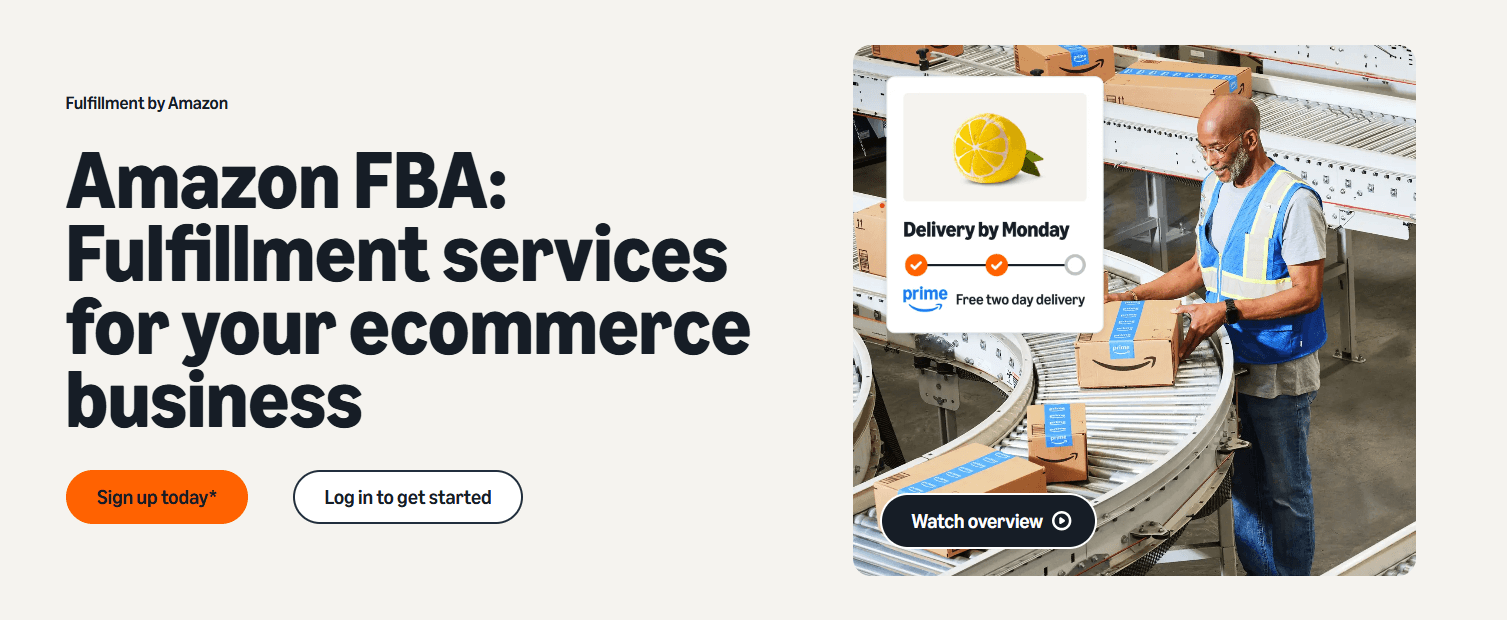
Basically, Amazon FBA (Fulfillment by Amazon) is a system where you effectively rent a tiny slice of Jeff Bezos' massive logistics empire. You buy your products, ship them in bulk directly to an Amazon warehouse, and then you just let them do the heavy lifting. When a random customer clicks "buy," Amazon's robots and workers pick it, pack it, and speed it off to the buyer's front door. Oh, and they handle the angry customer service emails, too.
- Inventory: You have to actually buy your products upfront with your own cash and mail them to Amazon.
- Listing: You fight for attention by creating highly optimized product pages on their marketplace.
- Fulfillment: Amazon literally stores your boxes on their massive shelves and handles all the shipping.
- Customer Service: If someone wants a refund, Amazon’s team deals with it. You don't have to talk to anyone.
People absolutely flock to FBA because it gives you the holy grail of ecommerce: The Prime Shipping badge. Customers trust that badge blindly, which means your sales can skyrocket overnight.
Further reading: If you want the dry, technical breakdown directly from the source, skim through Amazon’s official page right here: Fulfillment by amazon.
What Exactly Is Dropshipping?

Imagine running a wildly successful retail store without ever actually touching a single product. That’s dropshipping. You build a storefront, but you keep exactly zero inventory in your garage. When a customer buys a $30 dog collar from your website, you quietly turn around and buy that exact collar from a supplier in China for $10. The supplier then ships it directly to your customer. You pocket the $20 difference.
- No Inventory: You literally never pay for a product until a customer has already given you their money.
- Supplier Relationship: You act as the middleman. You find the buyers, but a secret supplier handles the physical goods.
- Platform Flexibility: You aren't stuck on Amazon. You can build a beautiful Shopify or WooCommerce site and own the whole experience.
- Customer Service: This is the catch. If the supplier messes up the shipping, the customer yells at you.
Dropshipping is wildly popular because you can start with almost zero money. However, the tradeoff is terrifyingly long shipping times, zero control over product quality, and massive competition.
Amazon FBA vs. Dropshipping: Key Differences
| Aspect | Amazon FBA | Dropshipping |
|---|---|---|
| Startup Cost | Prepare to spend a few thousand (inventory + fees) | Incredibly low (you just pay for website hosting and ads) |
| Inventory Management | Amazon handles the physical storage in their warehouses | You literally never hold or see the inventory |
| Fulfillment | Amazon ships the boxes and handles all the returns | The supplier ships it; you handle the customer complaints |
| Profit Margin | Generally much higher (thanks to the Prime badge trust) | Usually pretty slim (ad costs eat up your profits fast) |
| Scalability | Massive (Amazon's infrastructure can handle infinite orders) | Great, but you are totally at the mercy of your supplier's stock limits |
| Brand Control | Very low (You are just another seller on Amazon's site) | Super high (It’s your website, your rules, your branding) |
| Competition | Fierce (You are battling thousands of other Amazon sellers) | Brutal (Anyone with a laptop and $50 can copy your store) |
| Customer Data | Amazon hoards all the data. You don't get their emails. | You own the email list and can sell to them forever. |
Pros and Cons of Amazon FBA
Pros
- Prime Eligibility: Getting that little blue Prime logo next to your product is basically a license to print money.
- Hands-Off Fulfillment: You don't spend your weekends taping up cardboard boxes in your living room.
- Scalability: Going from 10 orders a day to 1,000 orders a day doesn't break your business.
- Trust Factor: People already trust Amazon with their credit cards. They don't have to trust you.
- Customer Service: You don't have to deal with angry buyers demanding refunds at 2 AM.
Cons
- Upfront Investment: You have to risk real money buying bulk inventory before making a single sale.
- Amazon Fees: They charge you for storage, fulfillment, and a referral fee. It eats into your profits heavily.
- Less Brand Control: To a buyer, they didn't buy from your brand; they "bought it on Amazon."
- Competition: You are constantly fighting off copycats, and sometimes even Amazon themselves will rip off your product.
- Account Risk: Amazon is a dictatorship. They can suspend your entire account overnight for a minor rules violation.
Pros and Cons of Dropshipping
Pros
- Low Startup Cost: You keep your savings intact because you aren't buying 500 units of a product you might never sell.
- Low Risk: If a product totally flops, you just delete the webpage. You didn't lose any inventory money.
- Flexibility: You can test 20 different weird products in a week to see what actually catches fire on social media.
- Branding Potential: You get to build a real, standalone brand that people might actually remember.
- Location Independence: You can literally run this business from a laptop on a beach in Bali.
Cons
- Lower Margins: After you pay the supplier and pay Mark Zuckerberg for Facebook ads, there usually isn't much meat left on the bone.
- Quality Control: You are blindly trusting a factory overseas to not ship literal garbage to your customers.
- Shipping Times: Explaining to an angry customer why their package is taking three weeks to arrive is deeply exhausting.
- Supplier Reliance: If your supplier suddenly shuts down or runs out of stock, your entire business grinds to a halt.
- Customer Service Burden: You are the one answering every single angry email and processing every single refund manually.
Cost Comparison: Amazon FBA vs. Dropshipping
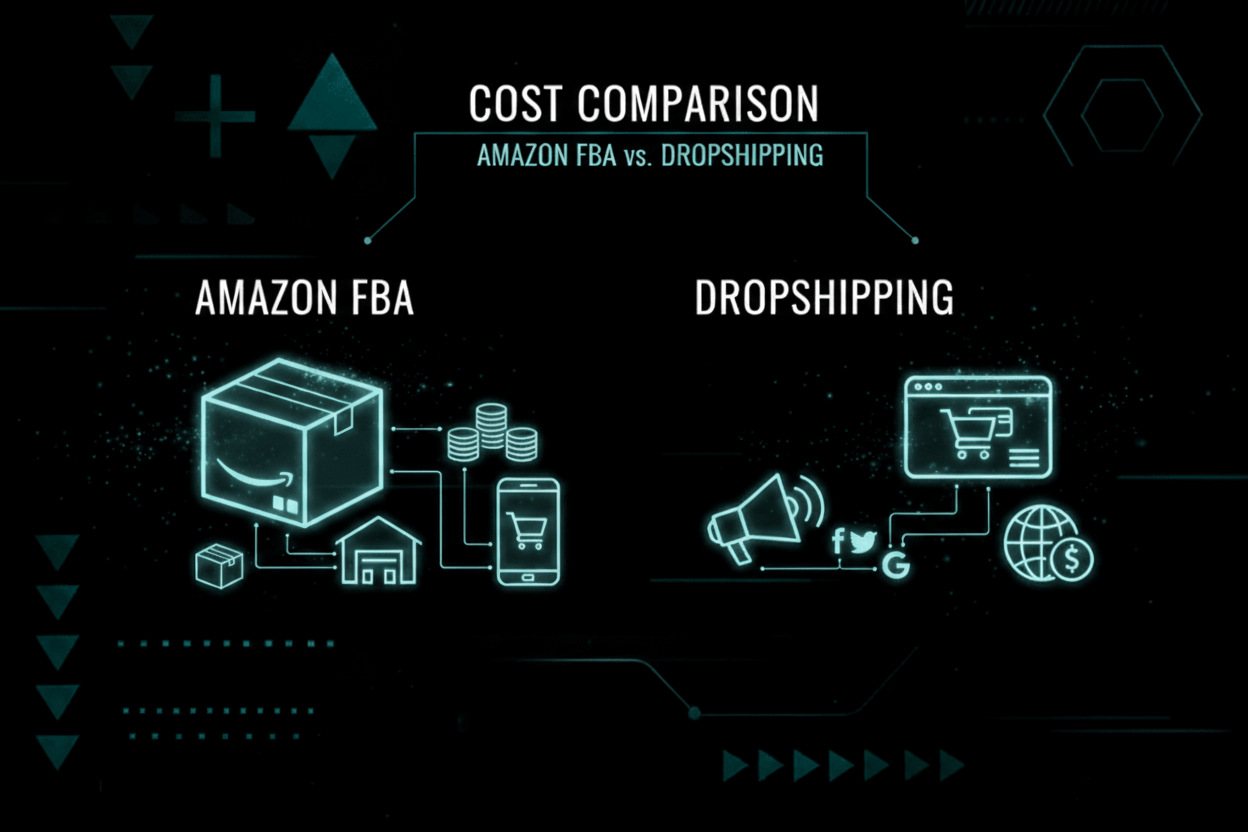
Amazon FBA Startup Costs
- Actually buying your initial inventory (Expect to drop anywhere from $1,000 to $5,000+ just to get started)
- Amazon's endless fees (They charge for picking, packing, shipping, and just letting your stuff sit on their shelves)
- The mandatory Amazon Professional Seller account ($39.99 every single month)
- The massive shipping bill to get your products from a factory in China over to an Amazon warehouse
- Hiring a decent photographer so your listing doesn't look like amateur hour
Dropshipping Startup Costs
- Paying for your storefront (Shopify is about $39 a month, or you can go the WooCommerce route)
- Monthly app subscriptions to connect to suppliers (like DSers, Spocket, or Zendrop)
- Your advertising budget (This is the big one. Facebook and TikTok ads will burn through your cash fast)
- Buying a clean domain name (Usually like $10 to $20 a year)
- Maybe throwing a few bucks at a freelancer to design a logo that doesn't look terrible
Key takeaway: Look, FBA requires you to put serious skin in the game financially, but the payoff can be huge if you hit a home run. Dropshipping is cheap enough that a college kid can start it, but you'll have to become an absolute wizard at marketing to survive.
Profit Margins and Scaling
Amazon FBA Margins
- Realistically, you are looking at taking home about 10% to 30% after Amazon takes their very large cut.
- If you invent your own product (Private Label) rather than reselling junk, those margins can stretch much higher.
- Because of that magical Prime badge, a shocking number of people will buy your stuff without even looking at the price tag.
Dropshipping Margins
- You are generally scraping by on 10% to 20% net margins. Sometimes even less if your ads aren't performing well.
- You are constantly in a race to the bottom with 50 other guys selling the exact same posture corrector.
- The only way to actually win here is by finding a wildly unique product before anyone else does and running killer ads.
Scaling: Growing an FBA business is essentially just sending bigger boxes of inventory to Amazon. Growing a dropshipping business usually means your customer service inbox catches on fire because your supplier can't handle the volume.
Customer Experience and Branding
Amazon FBA
- Buyers get their stuff in two days, in that iconic brown smiling box. They are thrilled.
- However, you can't really throw cool custom stickers or thank-you cards in the box easily.
- Amazon completely walls off the customer data. You can't email them a discount code next month.
Dropshipping
- You control the whole vibe. From the website design to the checkout process.
- You actually get to keep their email addresses and phone numbers. You can remarket to them for years for free.
- The massive downside? If the supplier uses cheap packaging or takes a month to deliver, the customer hates your brand forever.
Tip: Ask yourself what you actually want to build. If you want to create a loyal cult following that loves your brand, dropshipping (eventually transitioning into holding your own inventory) is the way. If you just want to print money by leveraging an existing machine, swallow your pride and go with FBA.
Risk and Challenges
Amazon FBA Risks
- You guess wrong on a product trend, and suddenly you have 2,000 garlic presses collecting dust and racking up monthly storage fees.
- The dreaded account suspension. Amazon bots can freeze your funds for months over a minor misunderstanding.
- They love to suddenly hike up fulfillment fees right before the holidays.
- If your product does too well, Amazon might literally copy it and sell it under their "Amazon Basics" line for half the price.
Dropshipping Risks
- Your supplier runs out of stock without telling you, and you just spent $500 on ads driving traffic to a sold-out item.
- Stripe or PayPal suddenly freezes your money because they think dropshipping is too "high risk."
- Facebook randomly bans your ad account, instantly shutting off your only source of traffic.
- Because it’s so easy to start, a teenager can clone your entire website and steal your ads by tomorrow afternoon.
Which Model Is Best for You?
Stop looking for a "perfect" answer. It honestly just comes down to your wallet and your personality.
Choose Amazon FBA if you:
- Actually have a few thousand dollars sitting in a bank account ready to invest.
- Want to ride the coattails of Amazon's insane daily traffic.
- Hate the idea of dealing with returns or answering customer emails.
- Can handle playing by someone else's very strict rules.
- Want a business that you could potentially sell for millions down the road.
Choose Dropshipping if you:
- Are starting with a shoestring budget and can't afford to buy inventory.
- Love to test weird, wacky product ideas constantly.
- Are a bit of a nerd when it comes to running Facebook ads or going viral on TikTok.
- Dream of building a recognizable brand that you fully own.
- Don't mind spending an hour a day apologizing to customers about slow shipping.
Hybrid Models and Ecommerce Trends in 2026
Honestly, the smartest guys in the room aren't even picking sides anymore. They are doing both.
- They throw up a quick dropshipping store just to see if a product gets any clicks.
- If it goes crazy viral, they immediately contact a factory, buy it in bulk, and ship it to an Amazon FBA warehouse to maximize the profits.
- They build a strong "Direct to Consumer" (DTC) brand on Shopify but use Amazon as a secondary sales channel.
If you look at where things are heading in 2026:
- AI is doing the heavy lifting: Nobody scrolls AliExpress manually anymore. Tools are using AI to instantly spot what's about to trend.
- Shipping is getting faster: Dropshippers are ditching China and using local 3PL warehouses in the US and Europe to get 3-day delivery times.
- Building a real brand is mandatory: You can't just sell random, unbranded junk anymore. Consumers are too smart.
- Don't put all your eggs in one basket: Sellers are tossing their products on Walmart.com and TikTok Shop so they don't get crushed if Amazon changes the rules.
Pro tip: If you really want to stop relying purely on expensive ads, take a weekend to read up on SEO onpage vs offpage optimization. Getting free Google traffic is a game-changer.
Case Studies: Real-World Examples
Amazon FBA Success Story: Private Label Home Goods
Let's look at Sarah. Back in 2023, she noticed a trend in eco-friendly kitchen stuff. She took a massive risk, dropped $4,000 on inventory, and shipped it to FBA. She spent weeks perfecting her photos and ran aggressive Amazon ads. Fast forward 18 months, and her weird little brand pulled in $250,000 in revenue, keeping about 22% of that as pure profit. Without Amazon's Prime badge and built-in traffic, she would have struggled to get off the ground.
Dropshipping Success Story: Niche Apparel Store
Then there’s Mike. Mike had about $1,500 to his name. He threw $300 at setting up a slick Shopify store selling aggressive, custom gym shirts. He dumped the remaining $1,200 into highly targeted Facebook ads aimed at weightlifters. Because the niche was so passionate, he hit $10,000 a month in sales within half a year. His margins were tiny (maybe 12%), but he used that cash flow to eventually start printing his own shirts in bulk to fix the profit issue.
Step-by-Step: How to Get Started
Amazon FBA
- Bite the bullet and buy a research tool like Jungle Scout or Helium 10 to find a product that isn't oversaturated.
- Hop on Alibaba and start messaging factories. Get samples. Haggle on the price.
- Open your Amazon Seller account and write a listing that actually sounds appealing.
- Have the factory slap an Amazon barcode on the boxes and freight them to a fulfillment center.
- Spend hours tweaking your photos and keywords so you actually show up in search results.
- Turn on Amazon PPC (ads) and beg your early customers for a five-star review.
Dropshipping
- Spend a week scrolling TikTok or the Facebook Ad Library looking for products that make people stop scrolling.
- Build a Shopify store. Make it look like a real, trustworthy brand, not a scammy popup site.
- Find a supplier app (like Zendrop or Spocket) that actually has decent shipping times.
- Import the product photos, but for the love of god, write your own product descriptions.
- Launch some low-budget ads to test the waters. See what clicks and what fails miserably.
- Kill the losing ads quickly, pour money into the winning ads, and brace yourself for the customer service emails.
Common Mistakes to Avoid
- Underestimating the hidden fees: Advertising costs, sudden return spikes, and storage fees will absolutely bleed you dry if you aren't doing the math daily.
- Treating customers like an afterthought: If you ignore emails, they will run to their credit card company and issue a chargeback. Too many of those, and your payment processor drops you.
- Trusting the first supplier you find: Order the product to your own house first. If it arrives broken in a crushed box after 4 weeks, don't sell it to your customers.
- Playing fast and loose with the rules: Don't try to outsmart Amazon. They will catch you, and they will ban you for life.
- Scaling way too fast: Just because an ad did well for two days doesn't mean you should instantly max out your credit cards buying inventory. Relax and validate the data.
Resources and Tools
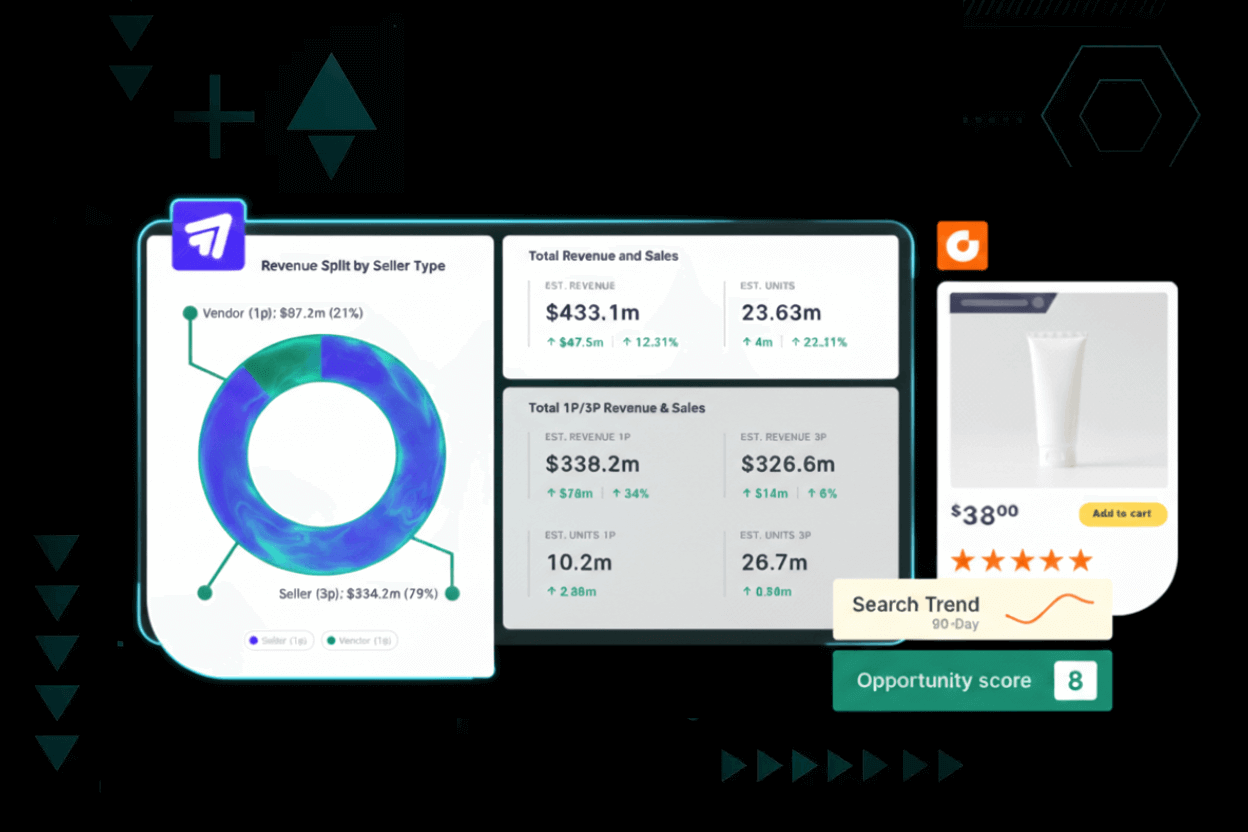
- How to Sell on Amazon – An absolute must-read deep dive for getting FBA right.
- Keyword Research – Figure out what people are actually typing into the search bar before you buy anything.
- SEMrush Free Trial – Use this to spy on your competitors and steal their traffic strategies.
- Jungle Scout, Helium 10 – Non-negotiable software if you want to survive on Amazon.
- Shopify, WooCommerce – The absolute best platforms to build your own dropshipping site.
- Oberlo, Spocket, DSers – The apps that magically connect your store to suppliers overseas.
FAQ: Amazon FBA vs. Dropshipping
Can I really do both Amazon FBA and dropshipping at the same time?
Absolutely. It’s actually the smartest way to play the game now. You spin up a dropshipping site to test out a crazy product idea with zero risk. If it starts flying off the virtual shelves, you call a factory, buy 1,000 units, and ship them to Amazon FBA to grab those massive Prime margins.
I don't live in the US. Which model is better for me?
You can do both from literally anywhere on earth. However, FBA means you have to deal with customs and shipping massive pallets of inventory across the ocean into US warehouses, which is a headache. Dropshipping is way easier for international sellers because the supplier handles all the border logistics directly to the customer.
Is one of these actually "passive income"?
Let's kill that myth right now. Neither is truly passive. But once FBA is up and ranking, it requires way less daily babysitting because Amazon handles the boxing and the angry customers. Dropshipping requires you to constantly monitor your ads and put out customer service fires every single day.
Your Ecommerce Path in 2026
Look, whether you go with Amazon FBA or lean into dropshipping, they are both incredibly valid, highly scalable ways to carve out an income online in 2026. Every model has its ugly downsides and its massive payoffs. Your final choice really just boils down to how much cash you have in the bank today, and how much daily stress you are willing to tolerate.
Just start somewhere. Test a small idea, see what happens, and be completely willing to pivot if it’s not working out. The people who make millions in this space are the ones who combine both strategies to cover their blind spots.
If you're ready to stop researching and start building, take a weekend and dig through our massive guides on selling on Amazon, mastering keyword research, and utilizing SEO tools to make sure your new business doesn't completely flop on day one.