
Let's be completely honest for a second: if you aren't doing keyword research right, your entire SEO and content strategy is basically a shot in the dark. In 2026, it is no longer just about blindly chasing search terms with massive volume. It's about actually getting inside your user's head, milking AI-driven insights for all they are worth, and building the kind of topical authority that makes both Google and generative AI platforms physically unable to ignore you.
But here is the brutal truth: the landscape has completely shifted. Those old-school keyword tools you used to rely on are now heavily injected with AI, people are searching using full, conversational sentences, and engines like Perplexity or Bing are literally handing out answers before a user even clicks a link. If you want to survive this, your research process has to be aggressively data-driven and insanely adaptable.
Consider this your ultimate survival guide. We are going to rip apart the absolute best keyword strategies for 2026, look at the tools you actually need, and lay out actionable steps to help you hunt down keywords that don't just bring in useless traffic—they bring in actual buyers.
Want to go deeper? We are also going to explore exactly how this research ties directly into AI optimization, massive content clusters, and getting found across multiple platforms. Let’s get into it.
What Is Keyword Research?
At its absolute core, keyword research is just the process of figuring out the exact words, phrases, and weird questions normal people are typing into search engines to solve their problems. It’s about understanding what your audience actually cares about, how they talk, and what secret intent is hiding behind their searches.
When you actually nail your keyword research, it allows you to:
- Figure out what topics actually matter to your paying audience.
- Groom your content so both search engines and AI answer bots love it.
- Uncover hidden goldmines for easy traffic and high-converting leads.
- Absolutely crush your competitors by targeting the weird queries they completely missed.
- Build unshakeable topical authority in your specific niche.
Further reading: If you want to totally geek out on the technical mechanics behind all this, definitely check out Moz’s classic Beginner’s Guide to Keyword Research.
Why Is Keyword Research Still Essential in 2026?
Look, even with AI chatbots and voice assistants taking over the world, keyword research is still the absolute backbone of digital marketing. Here is exactly why:
- User intent is literally everything: Search engines and AI models prioritize content that flawlessly matches what users actually want. If you understand the keyword, you understand the human behind it.
- The weird overlap between SEO and AI: The keywords you aggressively target don't just affect your Google rank anymore; they dictate whether you show up in AI-generated summaries and snippets.
- It is your ultimate competitive advantage: Smart, gritty research reveals the massive gaps your lazy competitors missed—especially those weird, long-tail questions.
- It keeps your content strategy from falling apart: Mapping your keywords ensures that every single page you publish has a clear job and attracts the exact right audience.
How Keyword Research Has Evolved (2020–2026)
Doing keyword research in 2026 feels like a totally different job than it did just a few years ago. Here is what shifted:
- AI is doing the heavy lifting now: Your tools now use intense machine learning to hand you semantic variations and user intent, rather than just spitting out exact-match words.
- People are talking to their phones: Voice search and AI assistants mean people are searching in full sentences now ("How do I actually fix...").
- The dreaded zero-click search: Google is answering questions right on the results page. If you want traffic, you have to target complex, informational queries that require a deep dive.
- Google cares about "entities," not just words: The algorithms understand topics and concepts now. Building semantic relevance and topic clusters is no longer optional.
- You aren't just optimizing for Google anymore: Your keywords dictate your visibility on YouTube, TikTok, Perplexity, Bing, and everywhere else.
Pro tip: Please stop obsessing over massive search volume. A low-volume keyword with insane buyer intent will always make you way more money than a high-volume keyword that nobody actually cares about.
Step-by-Step Keyword Research Process for 2026
Ready to hunt down the keywords that actually print money? Here is a battle-tested workflow, completely updated for the modern search landscape:
1. Define Your Goals and Audience
Start by getting completely clear on your end game. What are you actually trying to do here? Who are you trying to talk to?
- Are you just trying to build brand awareness, or do you need to drive hard sales today?
- What massive headaches does your audience need you to solve?
- What core topics actually move the needle for your business?
Write these goals down and sketch out your ideal buyer. This will keep you from chasing useless traffic.
2. Brainstorm Seed Keywords
Dump all your core topics, weird product features, and services onto a blank page. Steal ideas heavily from:
- Your own brain and the complaints your customer support team hears every day.
- Your biggest competitors' websites and their top-performing blog posts.
- Industry forums, angry Reddit threads, and Q&A sites (like Quora or Stack Exchange).
Don't stress about the search volume right now. Just get it all down on paper.
3. Expand Your List with Keyword Research Tools
Now it's time to bring in the heavy machinery. You need advanced tools to dig up related questions and hidden trends. Here is what is actually working in 2026:
- Semrush: The absolute beast of an all-in-one platform for tracking clusters and AI visibility. Give it a spin with the SEMrush Free Trial to see what I mean.
- Ahrefs: Ridiculously powerful for competitor analysis and seeing what features are popping up in the SERPs. Need help picking? Read our Ahrefs vs Semrush breakdown.
- Keyword Insights: A genius AI tool for clustering topics and mapping intent automatically.
- Google Trends: Completely free, and the best way to spot a trend before your competitors do.
- Answer the Public: Spits out an amazing visual map of every weird question people are asking about your topic.
- Alternative search engines: Don't forget to poke around DuckDuckGo and Perplexity for incredibly unique keyword angles.
Throw your seed keywords into these tools and ruthlessly analyze:
- Search volume (How many people are actually typing this?)
- Keyword difficulty (Will you get crushed trying to rank for this?)
- Trends (Is this topic dying, or blowing up?)
- Related terms and hidden questions.
- AI and SERP features (Are there snippets or AI summaries stealing all the clicks?)
Further reading: For a massive deep dive into these tools, see our guides to securing a SEMrush Free Trial and navigating the Best Search Engines Other Than Google.
4. Analyze Search Intent and SERP Features
Listen closely: not all keywords are created equal. You have to figure out the secret "why" behind the search:
- Informational: They just want to learn something ("how to do keyword research").
- Navigational: They are trying to find a specific website ("SEMrush login").
- Transactional: They have their credit card out and want to buy ("buy SEO tools").
- Commercial investigation: They are weighing their options before buying ("Ahrefs vs Semrush").
Go manually look at the actual Google results for your target keyword:
- Is Google showing a featured snippet, a video, or an AI overview?
- What is ranking? Are they long blog posts, or short product pages?
- Can you format your content to steal those AI-generated answers?
Pro tip: Lean heavily on tools like SEMrush’s Keyword Overview to instantly see the intent and SERP features without manually Googling everything.
5. Prioritize and Select Target Keywords
Now that you have a massive, chaotic list, it is time to trim the fat. Ask yourself:
- Relevance: Does this actually make sense for my business?
- Search volume: Are enough people searching for this to make it worth writing an article?
- Difficulty: Is my site strong enough to realistically beat the guys currently ranking?
- Intent: Will ranking for this keyword actually make me money, or just give me useless traffic?
- Trend: Is this a dying fad, or an evergreen topic?
Build a smart, balanced strategy that includes:
- A few massive, highly competitive keywords (to build your long-term authority).
- A ton of easy, long-tail keywords (to get quick wins and fast traffic).
- Highly conversational questions (to feed the AI and voice search algorithms).
6. Map Keywords to Content and Topic Clusters
Don't just throw keywords randomly at your blog. Assign each target phrase to a very specific page so you don't end up cannibalizing your own traffic.
- Build massive "pillar pages" for your broad topics (like a massive "Keyword Research Guide").
- Spin off smaller, highly specific articles to answer the long-tail questions (like "How to Use SEMrush for Keyword Research").
- Interlink all of these pages together so Google sees you as the ultimate topical authority.
Further reading: Need help structuring this mess? Check out our guide to SEO Onpage VS Offpage Optimization to see how the pros map their content.
7. Monitor, Measure, and Refine
Keyword research is absolutely never a "set it and forget it" task. You need to practically live in your analytics dashboard to monitor:
- Where you are actually ranking for your target keywords.
- If that traffic is actually staying on your site and engaging.
- If those visitors are pulling out their wallets and converting.
- Sudden drops in traffic or wildly new search trends popping up.
Never get comfortable. Update your strategy constantly based on cold hard data and whatever your competitors are doing.
Best Keyword Research Tools for 2026
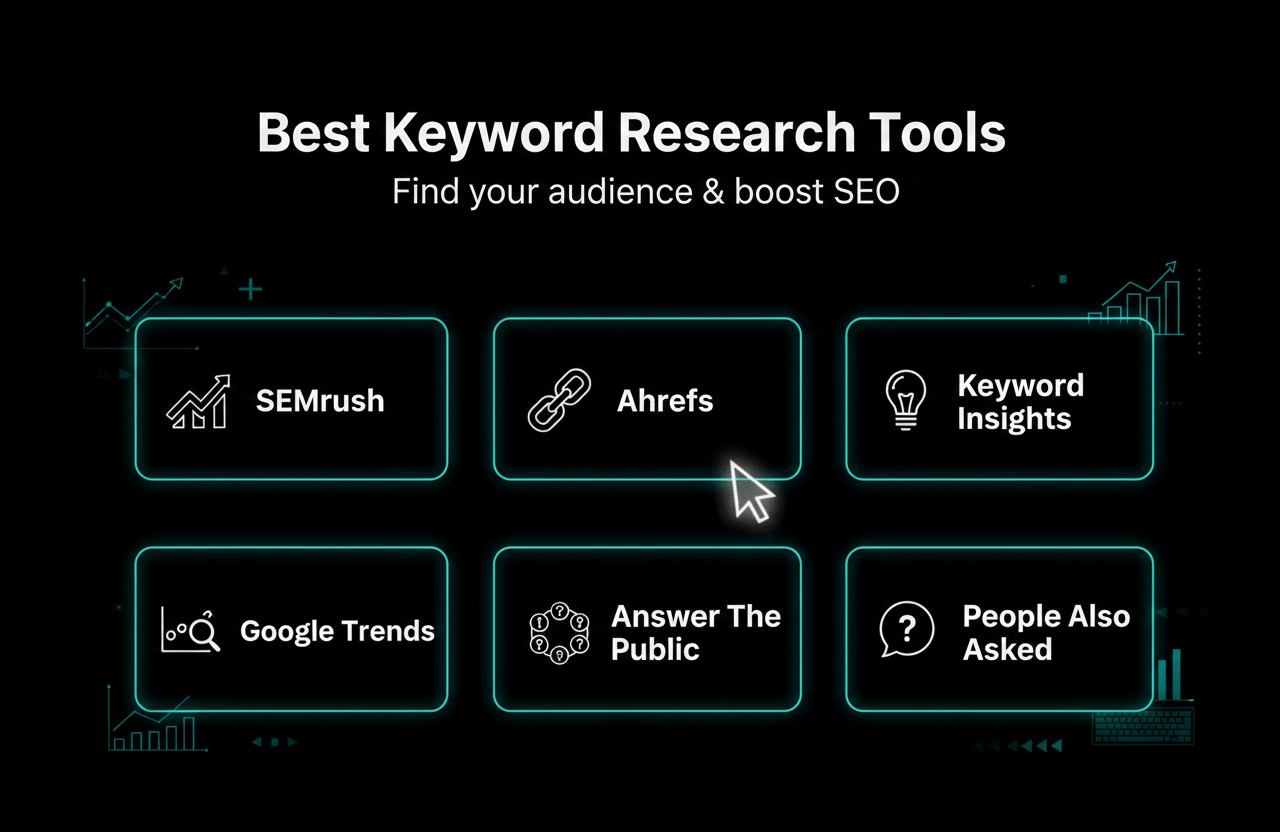
Trying to do this manually will make you crazy. Here are the absolute best tools on the market for 2026, and exactly what they are good at:
SEMrush
- Packs a ridiculous database of over 25 billion keywords.
- Uses highly advanced AI to group your topics and figure out search intent.
- Tracks your rankings, spots SERP features, and even monitors your AI visibility.
- Basically the holy grail for spying on your competitors.
Ahrefs
- Famous for having an insanely accurate backlink and keyword database.
- The keyword explorer filters are an absolute dream to use.
- The best tool on earth for spotting content gaps your competitors missed.
Keyword Insights
- Basically does the tedious job of clustering your keywords for you using AI.
- An absolute lifesaver if you are trying to build massive topical authority fast.
Google Trends
- It's completely free, and it is the only way to know if a topic is about to go viral.
- Mandatory if your business relies on seasonal shifts.
Answer the Public
- Takes your boring keyword and turns it into a giant, beautiful web of questions people are asking.
- The ultimate cheat code for stealing "People Also Ask" boxes.
People Also Ask Tools
- Literally scrapes the exact questions Google is showing in the search results.
- Forces you to write the exact answers the AI summaries are looking for.
Further reading: Still tearing your hair out trying to pick a platform? Read our brutal Ahrefs vs Semrush showdown.
Advanced Keyword Research Strategies
Ready to take the training wheels off? Here is how the pros are doing it in 2026:
1. Analyze Competitor Keywords and Content Gaps
- Plug your biggest rival into SEMrush or Ahrefs and steal their entire keyword list.
- Find the topics they wrote terrible, thin articles about, and write something ten times better.
- Look specifically for the hidden keywords that are driving 80% of their traffic.
2. Cluster Keywords by Topic and Intent
- Stop treating keywords like isolated islands. Group them together (like grouping "keyword research tools" with "how to do keyword research").
- Build a massive pillar page to dominate the whole cluster.
- Lean on tools like Keyword Insights or SEMrush’s Keyword Manager so you don't lose your mind doing this manually.
3. Target Long-Tail and Conversational Queries
- Hunt down those super weird, highly specific questions that have zero competition.
- Optimize your text to sound exactly like a human asking Siri a question.
- Answer the question immediately in your first paragraph.
4. Leverage AI and SERP Analysis
- Actually pay attention to what triggers an AI overview or a featured snippet on Google.
- Format your blog post specifically to hand the AI bot the exact answer it wants.
- Regularly check to see if ChatGPT or Gemini are mentioning your brand when asked about your niche.
5. Monitor Trends and Emerging Topics
- Keep Google Trends and Exploding Topics open in a browser tab at all times.
- Identify a new buzzword before the massive corporate blogs catch wind of it.
- Publish a quick, highly optimized article on it immediately to steal all the early traffic.
6. Integrate Keyword Research with Content and Schema
- Assign the right keyword to the right format. Don't write a 2,000-word blog post for a keyword that obviously demands a quick video.
- Wrap your content in structured data (schema markup) so the search bots don't have to guess what your page is about.
- Check out our guide to Article and BlogPosting Schema Markup so you don't break your site's code.
Common Keyword Research Mistakes to Avoid
- Chasing massive search volume blindly: If a keyword gets 100,000 searches a month but zero buyers, it is completely useless to you.
- Totally ignoring search intent: If you write a "how-to" guide for a keyword where people just want to buy a product, your bounce rate will skyrocket and Google will bury you.
- Being too proud to target long-tail keywords: Those weird, 6-word questions are incredibly easy to rank for and bring in highly targeted traffic. Don't ignore them.
- Ignoring the actual search results page: If the entire page 1 is dominated by massive YouTube videos and Wikipedia, your little blog post isn't going to rank. Move on.
- Keyword stuffing like it's 2005: Shoving your keyword into every single sentence makes you look like a spammer, and Google will actively penalize you for it.
- Never updating your research: The internet changes daily. The keywords that made you rich last year might be completely dead today. Re-evaluate constantly.
Keyword Research for AI and Answer Engines
Newsflash for 2026: you aren't just optimizing for Google anymore. AI answer engines like ChatGPT, Perplexity, Gemini, and Bing Copilot are totally hijacking how people find stuff online. Here is how you feed the machines:
- Target question-based and conversational keywords: AI bots are literally designed to answer natural, conversational questions. That is what you need to target.
- Structure content for easy extraction: Bots hate messy text. Use bold headings, bulleted lists, and brutally concise answers so the AI can scrape your page easily.
- Include authoritative sources and citations: AI models are trained to look for trusted data. If you link to high-quality sources, the AI is much more likely to trust you and cite your brand.
- Monitor your brand’s AI visibility: Start using tools like SEMrush’s AI Visibility Toolkit to literally track how often the AI bots are recommending your company.
Further reading: Want to know exactly how the bots are judging you? Read up on Search Engine Positioning SEO and see how the AI wave is changing the game.
How to Validate Keyword Choices
Before you spend a week writing a massive article, make absolutely sure the keyword is actually worth the effort:
- Physically Google the keyword. Look at the top 3 results. Can you realistically write something significantly better than them?
- Look at the domain authority of the sites ranking on page one. If it's all Forbes and Amazon, you probably aren't going to win.
- Ask yourself: if I actually rank #1 for this, will these people buy my product, or just read my article and leave?
- If you are unsure, throw $50 at Google Ads for that exact keyword. If nobody clicks your ad, nobody is going to click your organic result either.
How to Organize and Track Your Keywords
- Get organized. Use a massive Google Sheet or the built-in tracking tools inside SEMrush or Ahrefs.
- Tag your keywords by user intent, topic cluster, and where they sit in your sales funnel.
- Assign exactly one primary keyword to one specific URL so you never cannibalize yourself.
- Check your rankings at least once a week to spot massive drops before they destroy your revenue.
- Constantly add new, weird long-tail variations to your map as you discover them.
Pro tip: If you are running a WordPress site, the longer people stay on your page, the better you rank. Keep them reading by checking out our guide on How To Add A WordPress Custom Font? to instantly make your site look wildly premium.
Keyword Research Case Studies and Examples
Case Study 1: Launching a New Product
A small SaaS startup realized they couldn't compete for massive terms. They used SEMrush to hunt down highly specific, low-competition buyer keywords for their productivity app. By aggressively targeting long-tail queries like "best project management app for freelancers," they hit the front page of Google in under three months, pulling in thousands of highly targeted users who were desperate to sign up immediately.
Case Study 2: Building Topical Authority
An eco-friendly clothing brand decided to totally dominate the "sustainable fashion" cluster using Keyword Insights. Instead of just writing one post, they built a massive pillar page supported by dozens of highly specific articles ("eco-friendly fabrics," "how to build a sustainable wardrobe"). Google instantly recognized them as topical experts, granting them multiple featured snippets and boosting their overall organic traffic by a staggering 40% in just six months.
Case Study 3: Optimizing for AI and Voice Search
A smart content publisher noticed a massive spike in voice searches for "home security systems." Instead of writing a generic review, they specifically structured their content to answer the exact questions people were asking Siri ("What is the best home security system for apartments?"). The result? They completely hijacked the featured snippets on Google and became the primary cited source on both Perplexity and Bing Copilot.
Keyword Research and Content Optimization
Finding the magic keyword is literally just step one. To actually make it work, you have to execute:
- Weave your target keywords naturally into your H1 title, your subheadings, and your first paragraph. Don't force it.
- Proactively answer all the related questions the user might have before they even have to ask.
- Build a massive web of internal links pointing to your other related articles (Need help with links? See How To Get Backlinks For Your Website).
- Wrap the whole thing in rich schema markup so the AI bots can easily digest your genius.
- Revisit the article in 6 months, see what new keywords it accidentally ranked for, and expand the content to capture even more traffic.
Keyword Research for Different Platforms
Stop pretending Google is the only search engine on earth. Every platform has its own weird algorithm:
- YouTube: The second largest search engine. Use the YouTube autocomplete bar, TubeBuddy, or vidIQ to see exactly what videos people are searching for.
- Amazon: If you sell physical products, Amazon SEO is a totally different beast. Analyze competitor listings (see our breakdown on How To Sell On Amazon).
- Social media: Keep an eye on the trending hashtags on TikTok and X to catch viral waves before they hit Google.
- AI platforms: Start studying how people actually talk to ChatGPT, Perplexity, and Gemini. Optimize for entire conversational phrases, not just two-word keywords.
The Future of Keyword Research
Keyword research is going to keep mutating as AI and user habits evolve. Here is what is coming next:
- Google is going to care way more about "entities" and semantic relevance than ever before. You won't be able to rank by just repeating a phrase.
- Your keyword tools are going to fully integrate with AI writers, basically handing you a finished, perfectly optimized draft.
- The tools will start predicting trends in real-time before anyone even searches for them.
- You will have to optimize your content simultaneously for text search, voice assistants, and image queries.
- The feedback loop between your analytics dashboard and your content strategy will become completely instantaneous.
Ready to Master Keyword Research?
Listen, mastering your keyword research is the ultimate cheat code for surviving SEO and the incoming AI wave in 2026. By blending the gritty, old-school tactics with ridiculously powerful AI insights, you can easily uncover the massive opportunities your lazy competitors are completely missing.
Stop guessing. Start by mapping out exactly who your audience is, dump your ideas into a heavy-hitting tool, and ruthlessly prioritize the keywords that actually convert. Build killer content around those words, obsessively monitor your dashboard, and pivot the second the algorithm changes.
If you want to keep going down the rabbit hole, devour our massive guides on SEO Onpage VS Offpage Optimization, master the dark art of How To Get Backlinks For Your Website, and completely dominate your niche with Search Engine Positioning SEO.
Keyword research is not just about moving up a spreadsheet ranking; it is about completely understanding human psychology, building unshakeable brand authority, and printing money across every single digital channel. Stop waiting around. Start digging today.