
Let’s be totally real: managing Google Ads can sometimes feel like playing a high-stakes video game where the rules change every single week. You’re throwing your hard-earned budget at keywords, hoping for the best, and then you see it—the CTR. That little percentage sitting in your dashboard is more than just a number; it is essentially the heartbeat of your entire campaign. It tells you exactly how many people saw your ad and thought, "Yes, this is exactly what I was looking for," and actually clicked.
But here is the million-dollar question: what actually counts as a "good" CTR in 2026? Is there a magic number that works for everyone, or are you just chasing shadows? Whether you are trying to rescue a failing campaign or just want to squeeze more value out of every dollar you spend, understanding these benchmarks is the only way to win at the Google Ads game.
Let’s dive into the nitty-gritty of CTR and how to make yours skyrocket.
Pro tip: Don't treat CTR like a vanity metric. It is the engine behind your Quality Score. A high CTR basically tells Google you’re relevant, which leads to better ad positions and—best of all—lower costs per click. It’s a win-win.
What Is CTR in Google Ads?
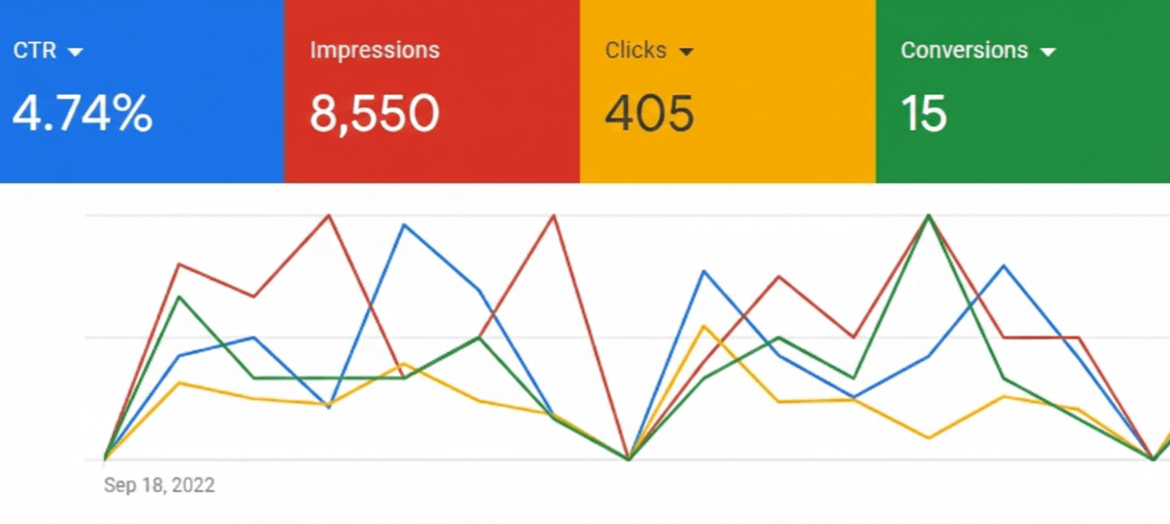
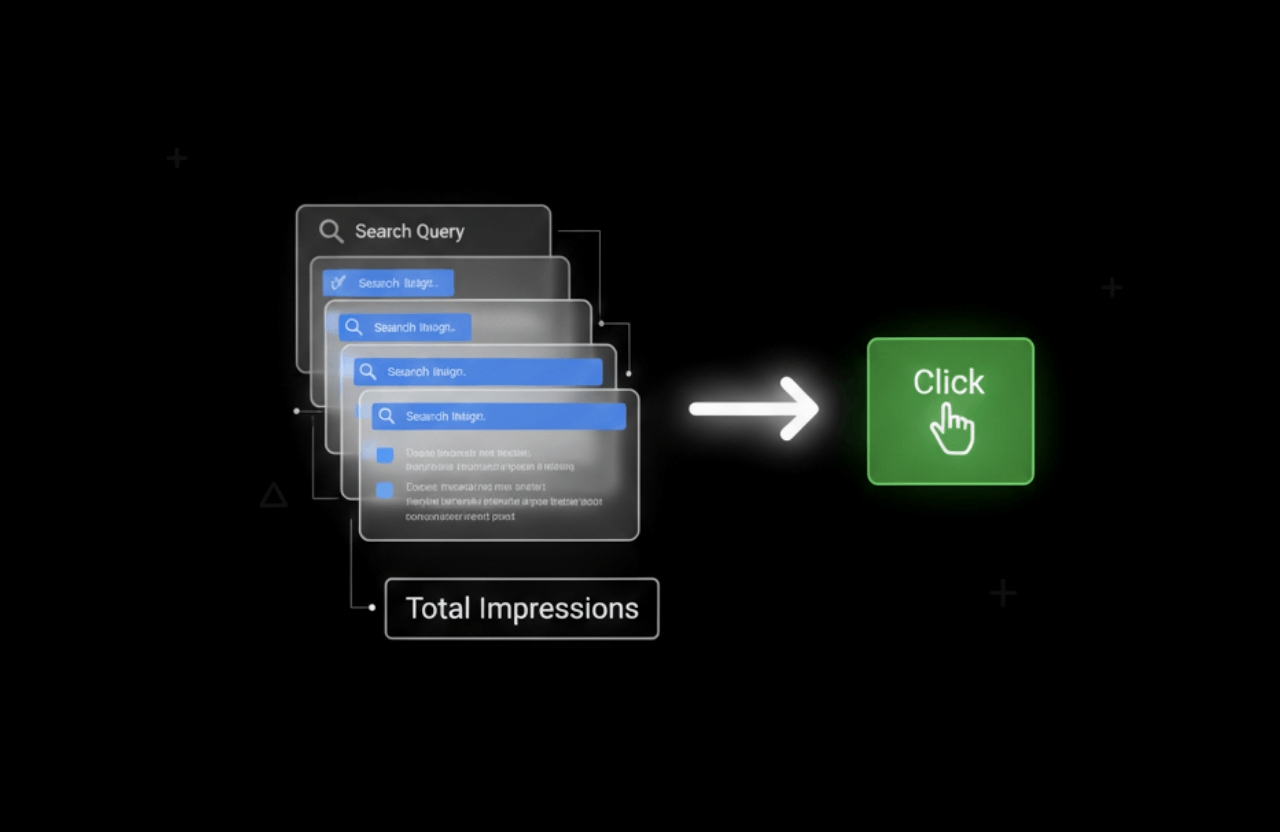
In plain English, CTR (Click-Through Rate) is a popularity contest for your ads. It measures the percentage of people who decided to click on your ad after seeing it pop up. The math is pretty simple:
CTR = (Clicks / Impressions) x 100%For example, if your ad showed up 1,000 times (impressions) and 50 people clicked on it, you’ve got a 5% CTR. Easy, right?
But here is the catch: CTR is the ultimate "relevance" signal. If your CTR is high, it means you’ve hit the sweet spot between what people are searching for and what your ad is offering. If it’s low, it’s usually a loud signal that something is off—maybe your targeting is too broad, or your ad copy is just plain boring.
Further reading: If you want to nerd out on the technical definitions, check out the official Google CTR help guide.
What Is a Good CTR for Google Ads?
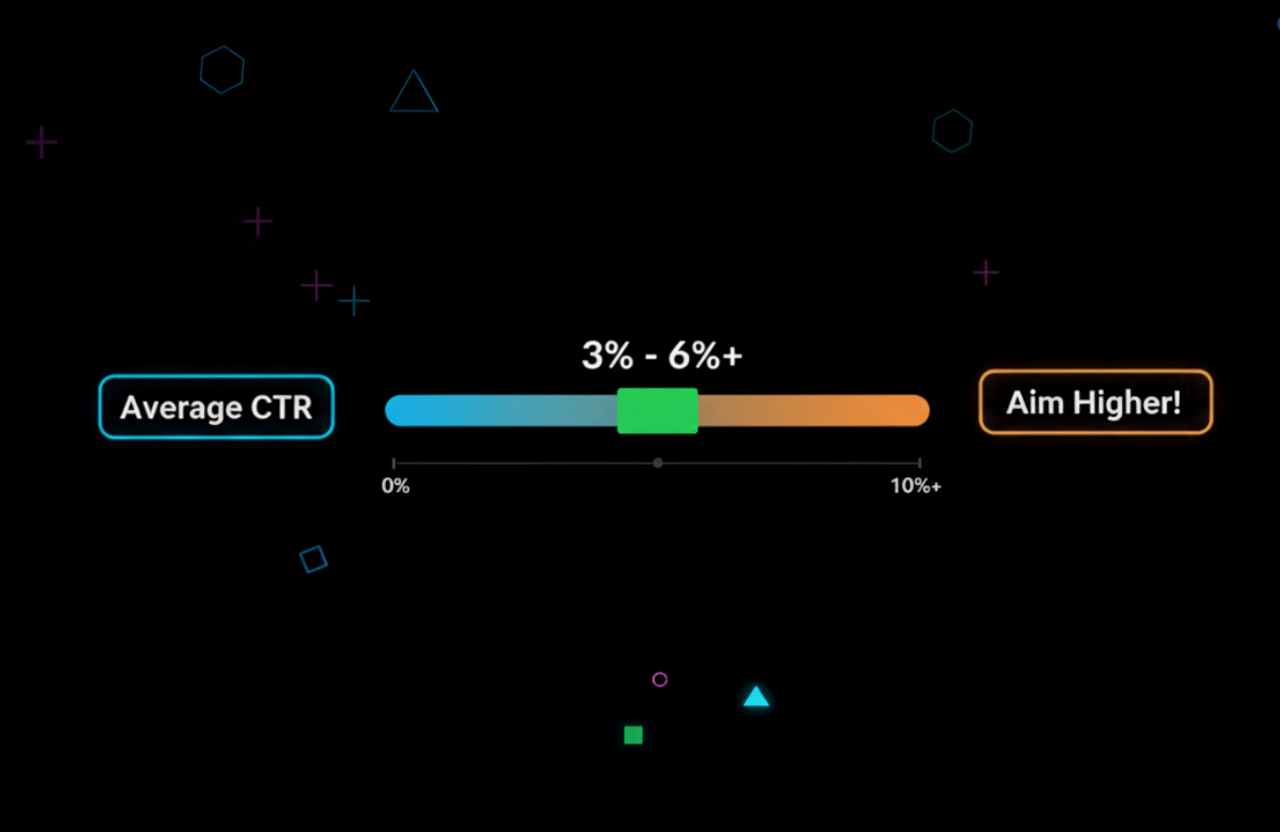
I wish I could give you a single "magic number," but the truth is that a "good" CTR depends entirely on where your ad lives, what you are selling, and how fierce your competition is. That said, having a baseline to compare yourself against is a total no-brainer.
Google Ads Search Network CTR Benchmarks
For search ads—those text ads that show up when someone is actively hunting for something on Google—here is what the playing field looks like:
- 3% to 6%: This is the "sweet spot" for most industries. If you’re here, you’re doing a solid job.
- 7% or higher: You’re officially a top-tier performer. Your ads are resonating perfectly.
- Under 2%: You’ve likely got some work to do. Either your keywords are too broad or your ad copy isn't grabbing attention.
According to the latest data from 2024, the average across all industries is roughly 6.1%. But keep in mind, some industries naturally have it harder than others. Source: WordStream
| Industry | Average Search CTR |
|---|---|
| Legal | 4.4% |
| Retail | 6.3% |
| Technology | 4.8% |
| Travel & Hospitality | 7.1% |
| Healthcare | 5.1% |
| Average (All Industries) | 6.1% |
Google Ads Display Network CTR Benchmarks
Now, the Display Network (the banner ads you see on blogs and websites) is a completely different beast. Don’t expect search-level numbers here.
- 0.5% to 1%: This is actually considered quite good for Display.
- Average: Around 1.1%.
Why so low? Because people aren't usually looking for you when they see a display ad—they’re just reading an article or browsing a site, so you have to work much harder to distract them.
Shopping and Video Campaigns
- Shopping Ads: Expect somewhere between 0.9% and 1.5%. Since these show a photo of the product, people only click if they’re genuinely interested.
- YouTube Video Ads: These can be as low as 0.1% or as high as 1%, depending entirely on how "skippable" your content feels.
Important: Benchmarks are great, but don't obsess over them. Your own historical data is often the most important yardstick for success.
Why Does CTR Matter in Google Ads?
If you think CTR is just about bragging rights, think again. It directly impacts your bottom line in three huge ways:
- Quality Score: Google rewards high CTRs with higher Quality Scores. This is huge because it can actually make your ads cheaper than your competitors'.
- Ad Rank: If your CTR is high, Google will often rank you higher on the page even if you aren't the highest bidder.
- Cost Efficiency: High CTR = Lower CPC (Cost Per Click). It’s the closest thing to a "buy one, get one free" deal in digital marketing.
- Relevance: It tells Google you aren't a spammer. You’re providing real value to the person searching.
Further reading: Want to see how CTR fits into the bigger picture? Check out our guide on search engine positioning and SEO.
Factors That Affect Your Google Ads CTR
So, why is your competitor getting more clicks? It usually boils down to a few key variables:
- Ad Position: Let’s be real—nobody scrolls to the bottom. The top spots always gobble up the most clicks.
- Keyword Intent: Bidding on "how to bake bread" is informational. Bidding on "buy sourdough bread online" is commercial. The latter will always have a higher CTR.
- Ad Copy Quality: If your headline is boring, people will skip it. You need a hook that addresses their problem immediately.
- Ad Extensions: Sitelinks and callouts make your ad physically bigger on the screen. Bigger ad = more clicks. It’s that simple.
- Brand Trust: If people recognize your logo, they are much more likely to click. Familiarity is a powerful thing.
- Device: Mobile users tend to have different clicking habits than desktop users. Always check your device stats.
- Relevance: Does your ad actually answer the question the user asked? If not, they won't click.
Pro tip: Stop guessing and start researching. Use keyword research to find the terms people are actually typing when they are ready to buy.
How to Analyze Your CTR in Google Ads
Don't just look at your overall account average—that's too broad. You need to put on your detective hat and look deeper:
- Campaign level: Which of your campaigns are carrying the team and which are dragging you down?
- Ad group level: Pinpoint exactly where the "leaks" are happening.
- Keyword level: You’ll often find that 20% of your keywords are driving 80% of your clicks. Focus on those.
- Ad level: This is where you test. Run two ads against each other and see which one the crowd likes more.
Further reading: Need a roadmap for analyzing your digital presence? Skim our SEO for new website checklist.
How to Improve Your Google Ads CTR: Actionable Strategies
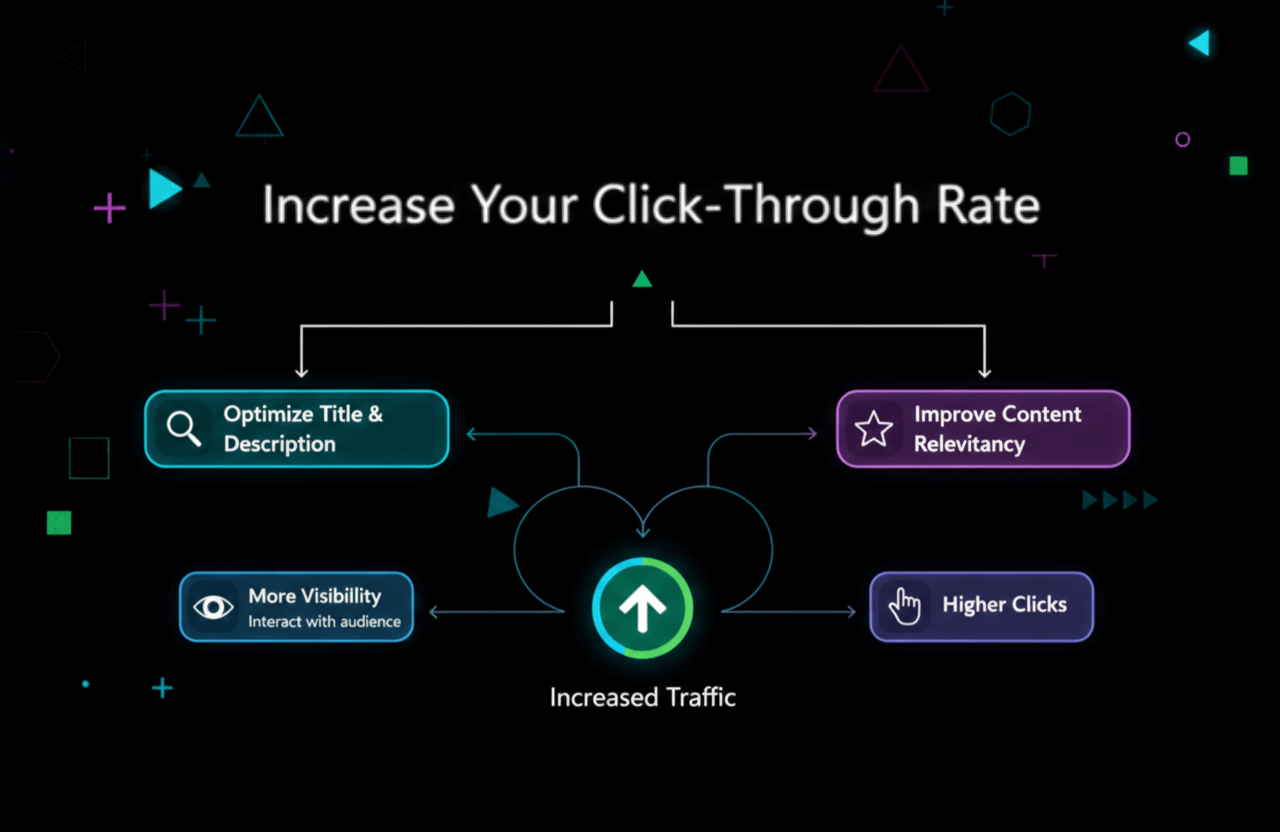
Ready to stop watching your budget disappear and start seeing results? Here is how to actually fix a low CTR:
1. Write Ads People Actually Want to Click
- Put your main keyword in the first headline. It’s the first thing people see.
- Stop talking about your "features" and start talking about "benefits." What's in it for them?
- Use a strong Call-to-Action (CTA). "Click here" is boring. Try "Claim Your Free Quote" or "Save 50% Today."
2. Be Ruthless with Your Keywords
- Focus on "commercial intent." Go for the users who are ready to pull out their wallets.
- Check your "Search Terms Report" every single week. Add "Negative Keywords" to block irrelevant traffic that’s killing your CTR.
- Group your keywords into tight, specific themes so your ad copy matches the search perfectly.
3. Maximize Your Ad Real Estate
- If you aren't using Sitelinks, Callouts, and Structured Snippets, you are leaving money on the table.
- Use Location and Price extensions to give people even more reasons to click before they even visit your site.
4. Don't Lie to Your Landing Page
- If your ad promises "Red Shoes" but your landing page shows "Blue Boots," people will leave faster than they arrived. Consistency is everything.
5. The Power of A/B Testing
- Always have at least two ads running in every ad group. Let them battle it out, kill the loser, and create a new challenger.
Pro tip: Don’t do it alone. Use tools like SEMrush to spy on your competitors and see what kind of ad copy is working for them.
Common CTR Mistakes and Misconceptions
- CTR isn't everything: A 100% CTR is useless if none of those people actually buy anything. Don't chase clicks; chase conversions.
- Clickbait is a trap: Misleading people might get you a click, but it'll destroy your trust and your bounce rate.
- Mixing search and display: They are two different worlds. Don't expect your display ads to perform like your search ads.
- Forgetting negatives: If you don't use negative keywords, you are basically paying for people to click your ad by mistake.
Further reading: For more on how to balance your strategy, check out SEO onpage vs offpage optimization.
How CTR Impacts Quality Score and CPC
Think of CTR as your "credit score" with Google. If it's high, Google trusts you. When Google trusts you, they give you:
- Cheaper clicks (Lower CPC).
- Better positions on the page.
- More eyes on your ads (Impression share).
Improving your CTR is honestly the fastest way to lower your advertising costs without touching your bids.
Learn more: Dive into the mystery of Quality Score with Google’s official guide.
Setting Realistic CTR Goals for Your Business
When you're setting your targets, be smart about it. Consider:
- What are other people in your industry getting?
- What did you hit last month? Try to beat it by 5%.
- Are you trying to build a brand (low CTR) or get sales (high CTR)?
Further reading: Want to see how these clicks turn into actual income? Read our guide on how to earn $100 per day online.
FAQ: What Is a Good CTR for Google Ads?
Is a higher CTR always better?
Honestly? No. If you're paying for clicks that don't convert, a high CTR is actually hurting your bank account. You want *qualified* clicks, not just more clicks.
What if my CTR is below the average?
Take a breath. It happens. Usually, it's a sign that your targeting is too broad. Tighten up your keywords and rewrite your headlines to be more specific to what people are searching for.
How often should I check my CTR?
At least once a week. If you make a big change, check it daily for a few days to make sure you didn't accidentally break something.
Does CTR affect my actual ad spend?
Big time. A high CTR can lower your CPC, meaning you get more visitors for the exact same budget.
Your Google Ads CTR Playbook
- Stop guessing—check your current CTR against the industry averages.
- Dive into your analytics and find the keywords that are actually working.
- Rewrite your headlines so they actually solve the user's problem.
- Use every ad extension Google gives you. It’s free real estate.
- Run A/B tests religiously. Kill the ads that don't perform.
- Focus on quality clicks that lead to actual sales.
- Keep a sharp eye on your Quality Score to keep your costs low.
CTR is a massive part of Google Ads, but it’s just one piece of the puzzle. When you combine a great CTR with a strong conversion rate, you’ve basically found the cheat code for digital marketing.
Ready to take things to the next level? Start by reviewing your current numbers, set some realistic goals, and start testing. With a little bit of consistent work, you’ll see your engagement go up and your costs go down. Happy bidding!