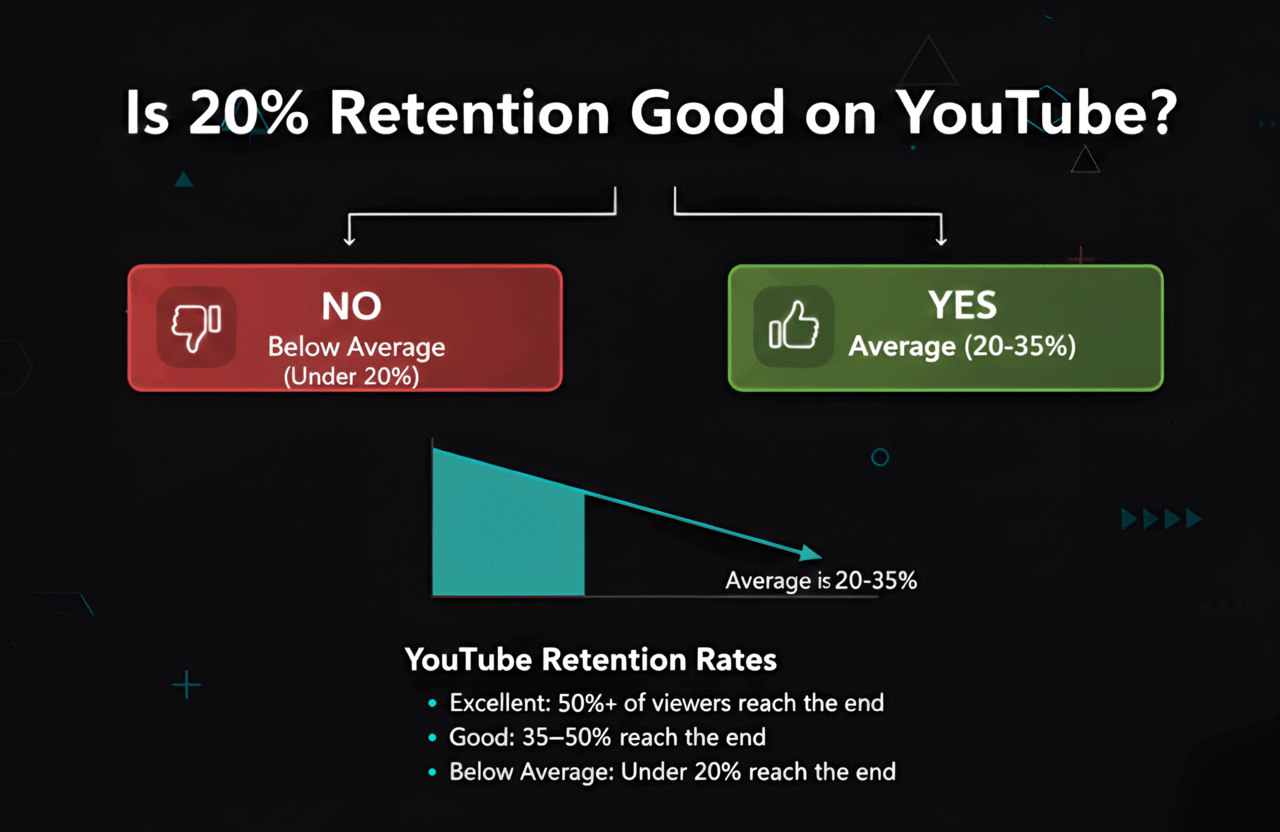
Look, let’s be totally real for a second—there is nothing that'll ruin your sleep at 2 AM quite like staring at a YouTube retention graph that looks like a straight drop off a cliff. We all love seeing that subscriber count go up, but let's be honest: retention is the real heartbeat of your channel. It’s a raw, unfiltered look inside your viewers' heads. It shows you exactly where they got bored, where they actually cared, and most importantly, it's the giant signal that tells the YouTube algorithm: "This video is absolute gold, push it to everyone!" or "Yeah, this one’s a total dud, let it bury itself." But if you’re looking at your stats and only 20% of people are sticking around until the end of a 5-minute video... should you be panicking, or is that just how the game works in 2026?
We’re going to get into the nitty-gritty of what a 20% completion rate actually means when you’re five minutes deep. We’ll see how you stack up against the big players and walk through some zero-fluff, practical fixes for those mid-video drop-offs so your channel can finally start hitting the numbers you've been chasing.
Quick insight: Retention isn't just a boring number on a dashboard. It’s the story your video tells, how well you manage what the audience expects, and the "quality vibes" you’re sending to YouTube’s massive recommendation engine.
YouTube Audience Retention
If we strip everything away, audience retention is just a way of tracking how much of your video people actually sat through before they decided they had better things to do. The "holy grail" here is that "end-to-end" retention—basically, the percentage of people who were still in the room when the credits started rolling.
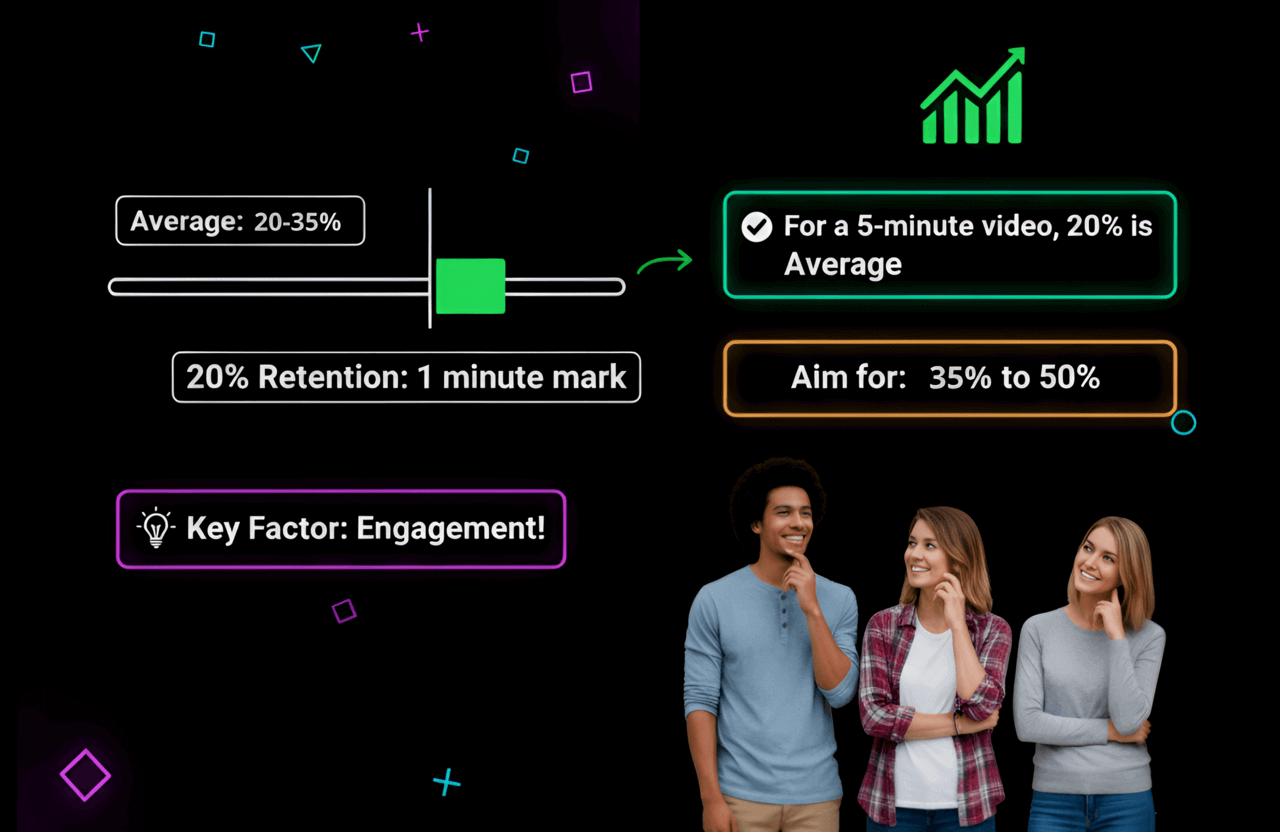
Think about the math for a second: for a 5-minute video, if your retention is at 20%, it means for every 100 people who clicked that thumbnail, only 20 actually stayed until the final second. The other 80? They basically "ghosted" you at some point during the video. Ouch.
But before you get too discouraged, you’ve got to put that 20% into some context. Is it a complete train wreck, or are you actually doing okay for your specific niche? To find out, we have to look at how the algorithm actually reads these signals.
Why Audience Retention Matters for YouTube Growth
The YouTube algorithm has one main mission: to keep people on the site for as long as humanly possible so it can serve them more ads. If your video has high retention, you are essentially helping YouTube do its job. And when you help YouTube, it rewards you by blasting your video out to a massive, fresh audience.
When those retention numbers are solid, some pretty cool stuff starts happening:
- You’ll start popping up way more in the "Suggested Videos" sidebar and on people’s "Home feed".
- Your videos will jump higher in the search results for your main keywords.
- The AI might start grabbing snippets for YouTube Shorts or customized recommendations.
- Your revenue and growth start to snowball because the "recommendation engine" is finally pulling for you.
On the flip side, if people are bailing out early, it doesn't matter how great your thumbnail is—the algorithm will eventually stop testing your video because the "user satisfaction" signal just isn't there. It's a tough pill to swallow, but it's true.
Further reading: Want the "official" word on how the algorithm picks winners? Take a peek at the YouTube Help: How YouTube Works guide straight from the source.
Is 20% Retention Good for a 5-Minute YouTube Video?
I’ll be totally blunt with you: 20% retention on a 5-minute video is a bit below the average for most successful creators. It’s definitely not a "death sentence"—especially if you’re a beginner—but it is a massive wake-up call that there’s some "low-hanging fruit" you need to fix. Let’s look at the benchmarks.
Industry Benchmarks for Audience Retention
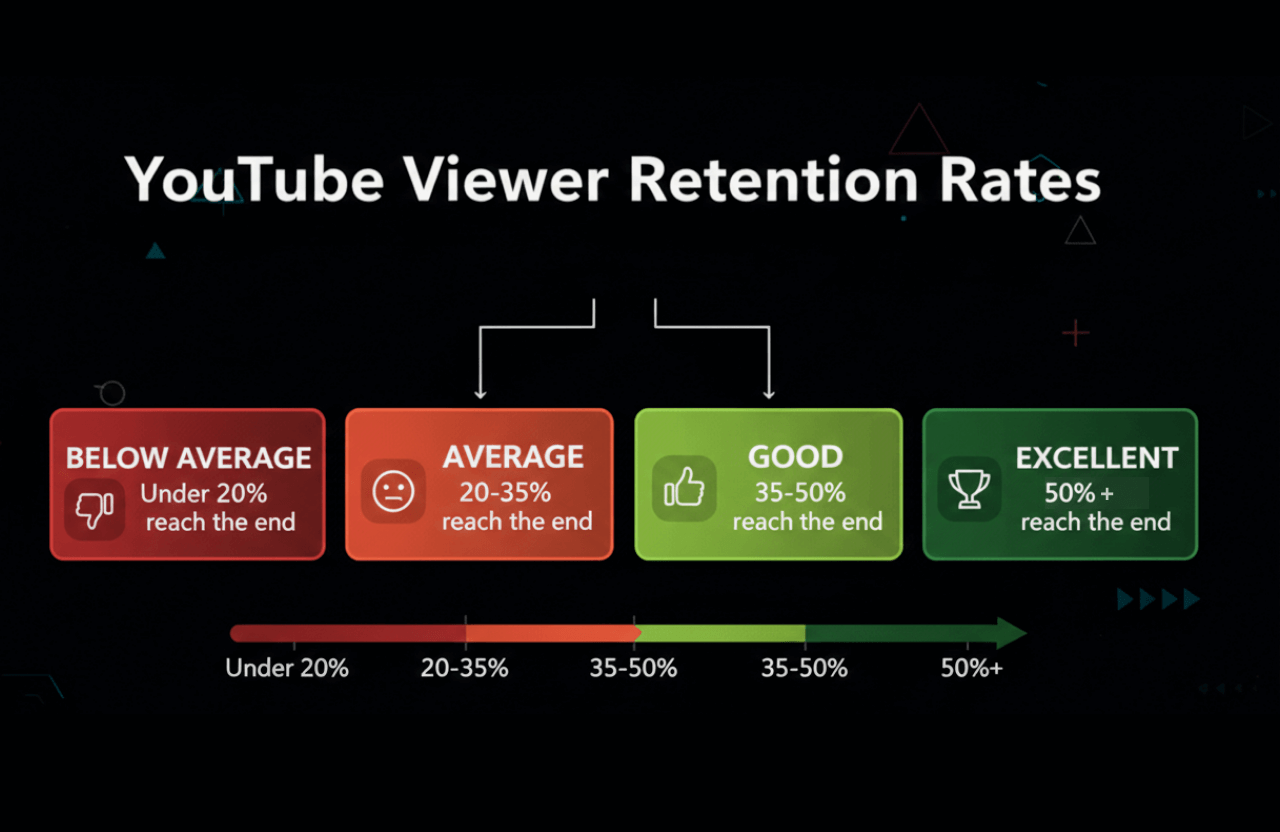
Every niche has its own set of rules, but generally, most pros and top-tier creators agree on these tiers for a 5-minute video:
- The Elite Tier (50%+): You’re a storytelling genius. Your videos are probably on the verge of going viral right now.
- The Solid Tier (35–50%): You’re doing great. YouTube is definitely going to keep pushing this content out.
- The Average Tier (20–35%): You’re in the "danger zone" where growth can feel frustratingly slow and stagnant.
- The Struggle Tier (Under 20%): People are leaving almost as soon as they arrive. Something is fundamentally wrong with your hook or your pacing.
Most experienced creators aim for at least a 35% completion rate on a 5-minute clip. If you’re at 20%, don't beat yourself up—it’s a very common starting point. It just means your "average view duration" is roughly 1 minute. You just need to find a way to keep them for an extra 60 seconds to see a massive growth spike.
Pro tip: Remember, context is everything. If you’re making a super-dry technical tutorial, 20% might actually be "fine" because people just dip in for one specific answer and leave. But if you’re doing comedy or vlogs? 20% is a loud signal that you need to tighten up your editing.
How Does Video Length Affect Retention?
It’s simple math: the shorter the video, the easier it is to get people to stay. If your video is only a minute long, hitting 60-70% retention is pretty standard. But as the clock ticks toward 5 minutes, people’s focus naturally starts to wander. Keeping someone locked in for that full 5 minutes is a real craft.
If your graph shows a massive "cliff" in the first 30 seconds, that is a huge red flag. It usually means your thumbnail promised a party, but your intro felt like a boring lecture. People don't like being misled.
How YouTube Analytics Helps You Understand Retention
YouTube Studio gives you some insanely powerful tools to see exactly where you’re losing people. You need to be obsessed with two things:
- Absolute Retention: The raw, second-by-second data of who stayed and who left. This is where you see the "leaks."
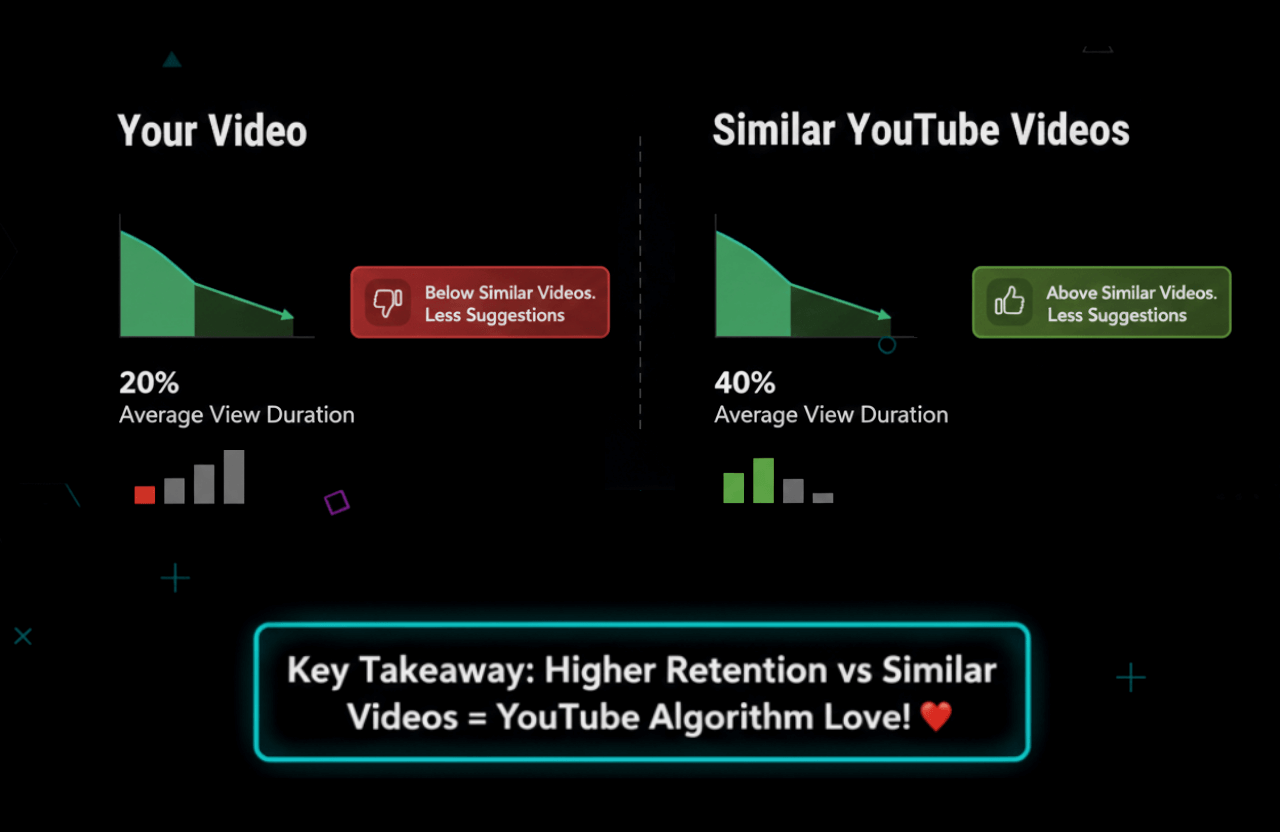
- Relative Retention: This is the "cheat code" that compares your video to every other video of the same length on the whole platform. If your line is "above average," you're winning the game.
How to Read Your Audience Retention Graph
If you’re serious about moving past that 20% plateau, you have to treat the YouTube Studio graph like a direct conversation with your fans. They are literally telling you what they love and what makes them bored to tears. You just have to listen.
Keep a sharp eye out for these four "storytelling" shapes in your analytics:
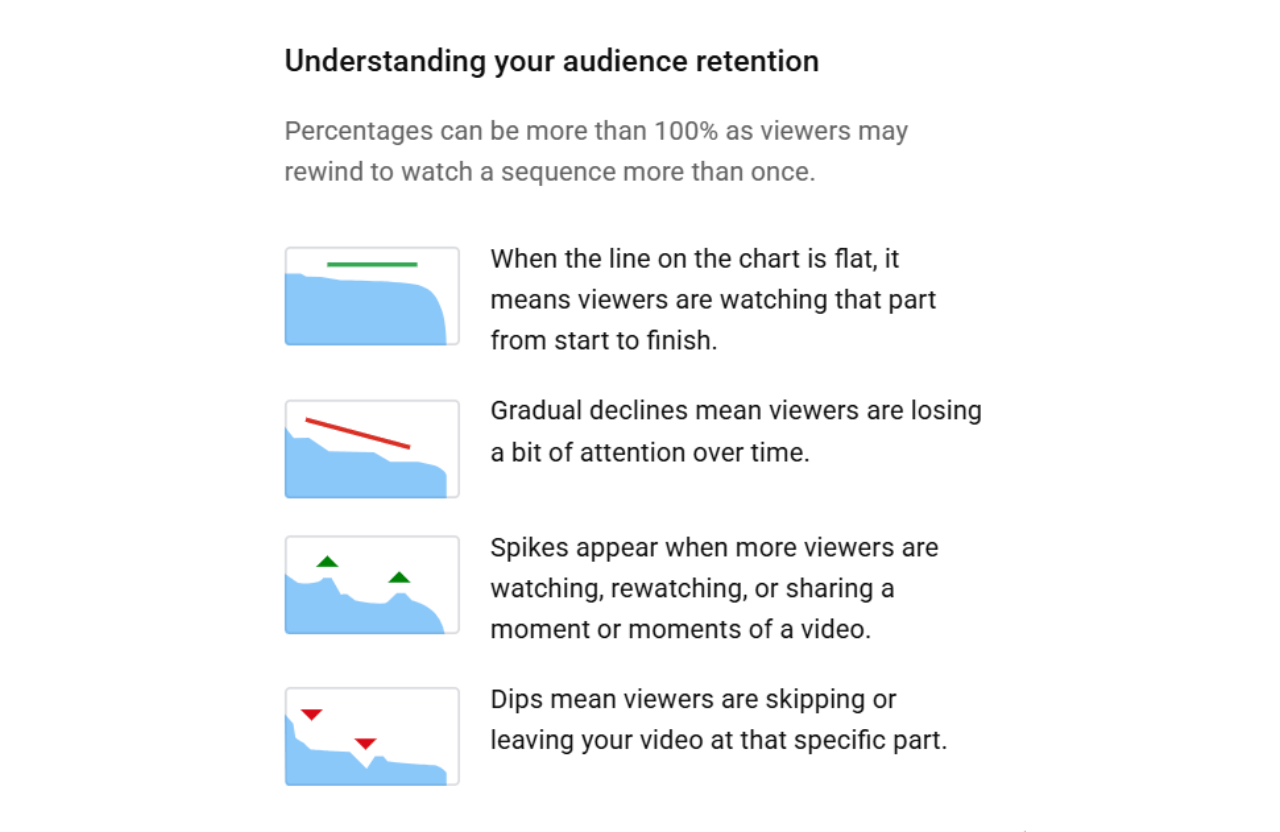
The Cliff (The Initial Drop): A sharp vertical drop in the first 30 seconds. Your hook failed. Maybe you rambled about your breakfast instead of getting to the point. Fix your intro, fast!
The Slow Slide: A steady, diagonal line heading south. This means your video is "okay," but it’s missing "pattern interrupts"—those visual or audio changes that keep the brain awake and engaged.
The Spikes (The Rewatches): When the line actually goes *up*. This is absolute gold. It means people rewound to see a joke again or to understand a complex step. Do more of whatever you did there!
The Valleys (The Skips): Sudden dips in the middle. Usually happens during boring sponsor reads, generic intros, or when you start repeating yourself. Cut those parts out next time—no mercy.
Don’t just look at the total percentage; look at these specific moments in the Analytics tab to find where people are checking out.
Further reading: For a full breakdown of all the numbers, check out the YouTube Help: Analytics Overview.
What Impacts Audience Retention on YouTube?
So, why do people leave? It usually isn’t because they’re "mean"—it’s because something in your video actively pushed them away. Here are the main culprits you should watch out for:
- Content structure: If you don’t have a clear plan, you will ramble. And rambling is the #1 killer of channel growth.
- Editing style: In 2026, people expect a fast pace. Use B-roll, text overlays, and sound effects to keep the energy high. Don't let the screen get "static."
- Storytelling: Are you building curiosity? If the viewer doesn't have a reason to see "what happens next," they will click away within seconds.
- Value delivery: If your title promises a fix for a broken sink, don't spend 3 minutes talking about the history of plumbing. Just fix the sink!
- Audience targeting: If you make a video for pros but explain it like they’re toddlers, they’ll leave out of pure boredom. Know who you're talking to.
Retention is ultimately about respect. Respect your viewer's time, and they will give you their attention. It's a fair trade.
Pro tip: Try doing a "blind" watch of your own video. If you find yourself wanting to check your phone or open another tab, that is exactly where your edit was too slow. Be ruthless with the delete key.
Case Studies: What Top Creators Achieve
Let's look at how the pros play the "retention game" across different styles:
The "Value King" (Educational)
A top-tier tutorial channel making 5-minute guides usually hits 45-55% retention. How? They start with a 5-second "payoff" showing the end result, followed by a zero-fluff explanation. Every single second has a clear purpose.
The "Attention Architect" (Entertainment)
The best storytellers use "open loops"—they ask a massive question at the start but don't give the answer until the very end. This keeps their 5-7 minute videos sitting at 50% retention or higher because the viewer *has* to know how it ends.
The "Rising Star" (Beginner)
We've seen channels start at 15-20%. By simply cutting their 10-second "intro logo" and moving the most exciting moment to the first 10 seconds, they often see their retention jump to 35% almost overnight. It's that simple.
Key takeaway: You aren't "stuck" at 20%. It is a skill you can learn by being a more ruthless editor and obsessively studying your own graphs.
Does 20% Retention Hurt Your Channel?
If you're sitting at 20%, your channel isn't "broken," but it’s definitely stuck in low gear. YouTube's algorithm looks at a "portfolio" of factors, including:
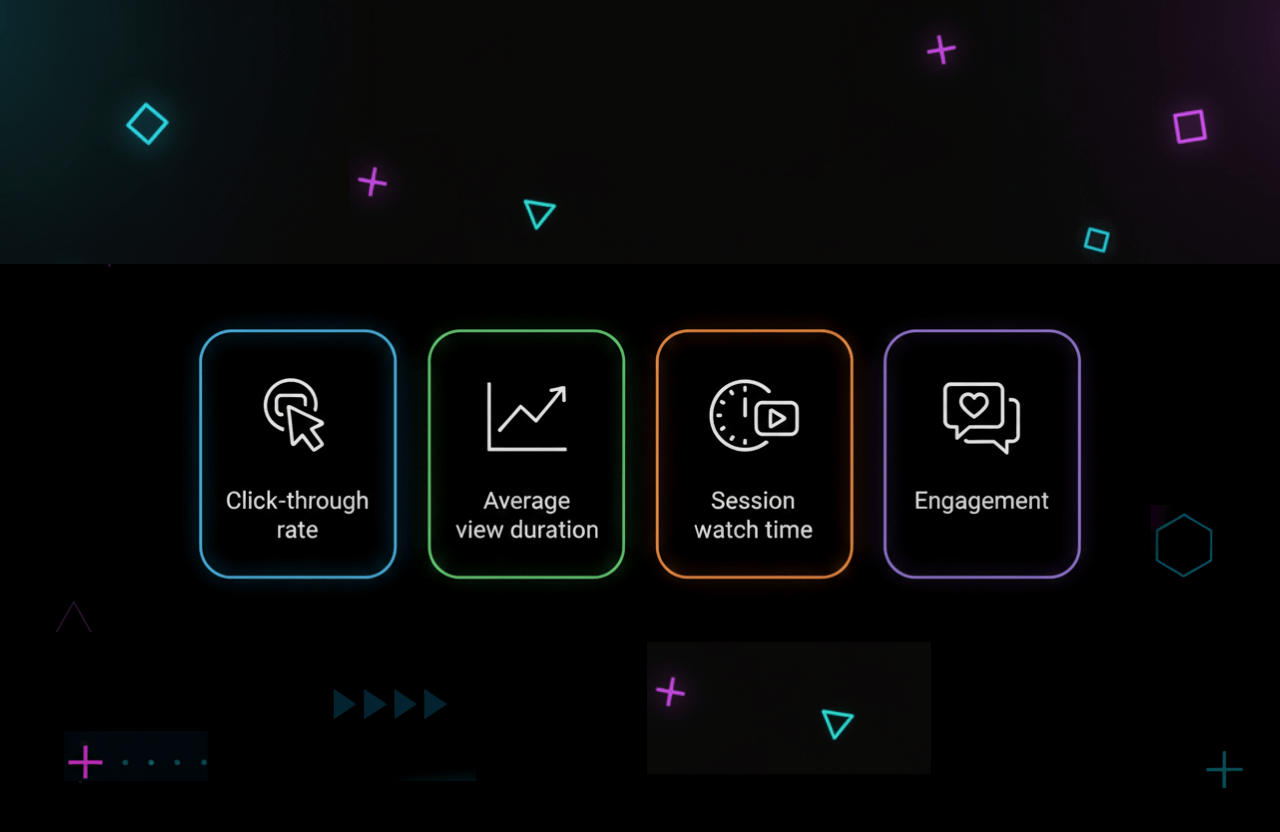
- Click-through rate (How many people actually click that thumbnail)
- Average view duration (The actual minutes they sat and watched)
- Session watch time (Does your video make them stay on the platform even longer?)
- Engagement (Likes and comments act as secondary "bonus" signals to the system)
If your CTR is massive (like 15%) but your retention is only 20%, you might get some initial views, but the algorithm will eventually cool off. To have long-term "evergreen" growth, you need to fix that retention. Period.
How to Benchmark Your Own Retention
Stop comparing your "Day 1" to someone else's "Year 10." Seriously. Compare yourself to:
- Your own past videos. Are you doing better than you were last month? That's the real win.
- The "Relative Retention" line in your dashboard. Are you above that gray zone?
- Realistic goals. If you're at 20%, don't aim for 60% next week. Aim for 24%. Tiny, incremental gains win the race.
Advanced Tips for Boosting Retention
- Use chapter markers: Surprisingly, letting people skip to what they want actually makes them stay longer because they don't get frustrated and leave.
- The "Pattern Interrupt": Every 45 seconds, change something up. A camera angle, a text pop, or a sound effect. It resets the viewer's focus.
- Tease the "Payoff": In the first 10 seconds, show a 2-second teaser of the most exciting part of the video. Give them a reason to stay.
- Mobile Optimization: Most people are watching on a tiny screen. If your text is too small or visuals are too cluttered, they’ll bail. Think mobile-first.
- The "Comment Challenge": Don't just say "comment below." Give them a specific, funny question to answer halfway through. It keeps them engaged and active.
Further reading: Want to see how these tactics work on other platforms? Check out our guide on How to go viral on tiktok.
FAQ: Audience Retention on YouTube
What is a good audience retention rate for a 5-minute video?
The goal for most successful creators is 35% to 50%. If you can hit 50% on a 5-minute video, you have a massive chance of that video being picked up by the algorithm and going viral across the platform.
How can I improve my YouTube video’s retention?
The quickest wins come from fixing your intro (the first 30 seconds), cutting out the "fluff" or repetitive talk, and using visual variety like B-roll and graphics to keep the pace fast and interesting.
Does low retention always mean my video is bad?
Not necessarily! Sometimes you just haven't found the "right" audience yet. Or maybe your video is a reference guide where people only need 10 seconds of info. Use retention as a tool for growth, not a reason to quit your dream.
Want to go deeper? If you want to know how these views turn into actual cash, read our guides on how much YouTube pays for 1 million views and how to earn $100 per day.
At the end of the day, 20% retention on a 5-minute YouTube video is a loud signal that you're leaving a lot of potential on the table. It is an average starting point, but it shouldn't be your destination. By diving into your analytics and becoming a more ruthless editor, you can absolutely push that number into the 30s and 40s.
YouTube success is a marathon of tiny adjustments. Focus on making each video just 1% more engaging than the last one. Trust your data, listen to your audience, and eventually, that 20% will be a distant memory as your channel takes off into the stratosphere. Keep going.
Happy creating!