Google has basically been the undisputed king of the internet for as long as most of us can remember. But heading deep into 2026, it is definitely not your only option anymore.
Whether you are completely sick of being tracked across the web, exhausted by the endless clutter on your results page, or just want to see what the internet looks like outside of the Google bubble, there are some seriously powerful alternatives out there. And honestly, each one has its own weird quirks, massive strengths, and totally different user base.
Consider this your ultimate guide to breaking free. We are going to break down the absolute best search engines other than Google, compare how they actually perform in the real world, and help you figure out which one actually respects your privacy and browsing habits.
Let’s get into it.
Why look beyond Google? Rampant privacy concerns, annoying algorithmic bias, and a desperate desire for just a clean, normal search results page are driving millions of people to ditch Google in 2026.
Why Consider Search Engines Other Than Google?
Look, Google literally handles over 90% of all search queries on the planet (StatCounter, 2026). But that massive, unprecedented monopoly comes with a pretty hefty price tag:
- Privacy: Google’s entire multi-billion-dollar business model revolves around hoarding your personal data to feed you targeted ads. People are finally waking up and demanding control over their own information.
- Algorithmic Filtering: Google heavily personalizes your results based on what it thinks you want to see. This creates a massive "filter bubble" that traps you and hides diverse viewpoints.
- Ad Saturation: Have you Googled something recently? The first page is a total nightmare of sponsored ads, aggressive shopping boxes, and AI overviews. You usually have to scroll down three times just to find a normal website.
- Regional Restrictions: In a lot of countries, Google is actively blocked or heavily censored, making alternatives an absolute necessity for survival.
- Desire for Innovation: The new kids on the block are actually experimenting with cool stuff—like decentralized indexing and community-driven ranking—that Google is simply too big to try.
Taking the leap and trying a completely different search engine can immediately help you:
- Instantly upgrade your digital privacy
- Break out of your bubble and find entirely new perspectives
- Drastically cut down on those creepy, stalker-like targeted ads
- Support small, independent, or open-source tech teams
- Find highly specialized tools for deep research or local content
Further reading: If you want a really nerdy, technical deep dive into this, check out the Mozilla Foundation Search & Privacy Report.
The Best Search Engines Other Than Google in 2026
Here is a brutally honest, curated list of the absolute best Google alternatives right now. We'll look at their core features, how they handle your data, and who they are actually built for.
- Bing
- DuckDuckGo
- Brave Search
- Yahoo
- Startpage
- Swisscows
- Qwant
- Ecosia
- Yandex
- Mojeek
1. Bing
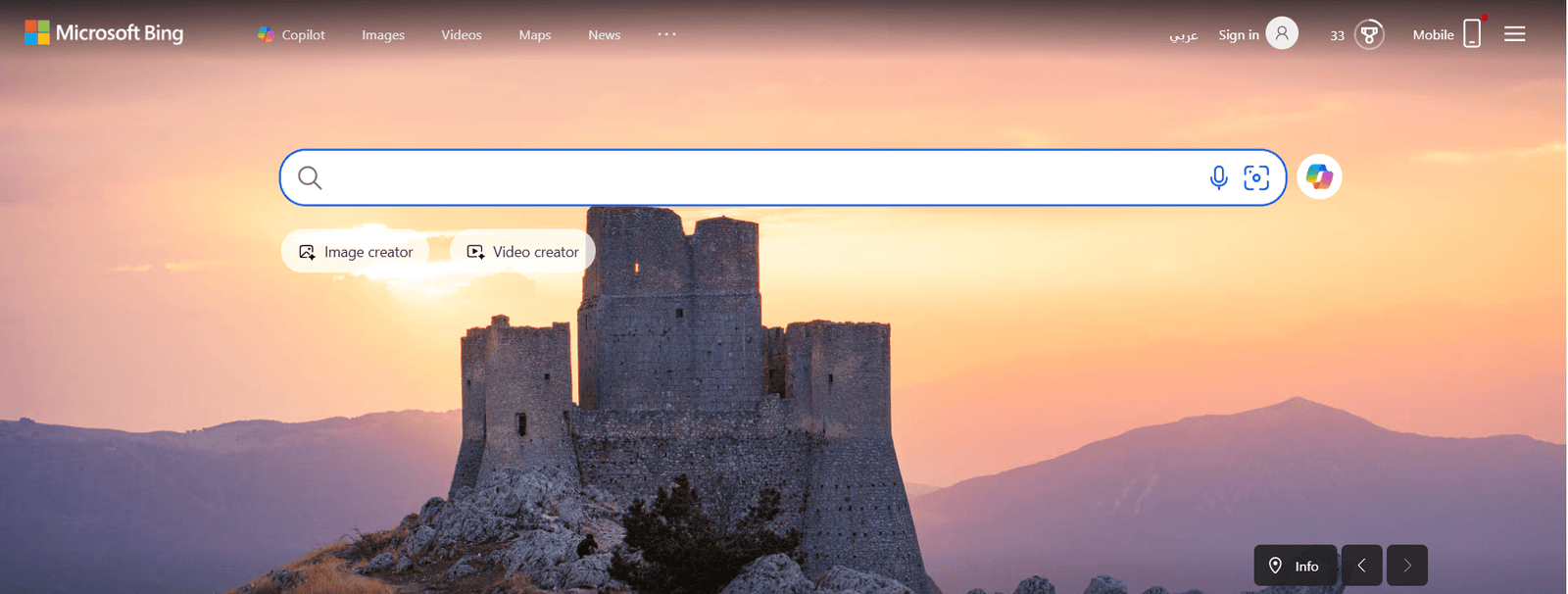
Best for: People who want a feature-packed dashboard and love the Microsoft ecosystem.
Website: bing.com
Bing used to be the butt of a lot of internet jokes, but Microsoft has poured billions of dollars into it. By 2026, it has morphed into an absolute powerhouse heavily driven by Copilot (Microsoft’s AI assistant). It ties beautifully into Windows and the Edge browser.
- Strengths: Unbelievably good image and video search, a cool rewards program that literally pays you to search, and deep AI chat integration.
- Privacy: Let's be real—it still tracks you for ad personalization, though they do give you some decent privacy toggles. It is nowhere near as private as DuckDuckGo.
- Unique features: Killer visual search tools and an ad layout that honestly feels a lot cleaner than Google's current mess.
Tip: If you just bought a Windows 11 PC, Bing is already baked right into your bottom search bar.
2. DuckDuckGo
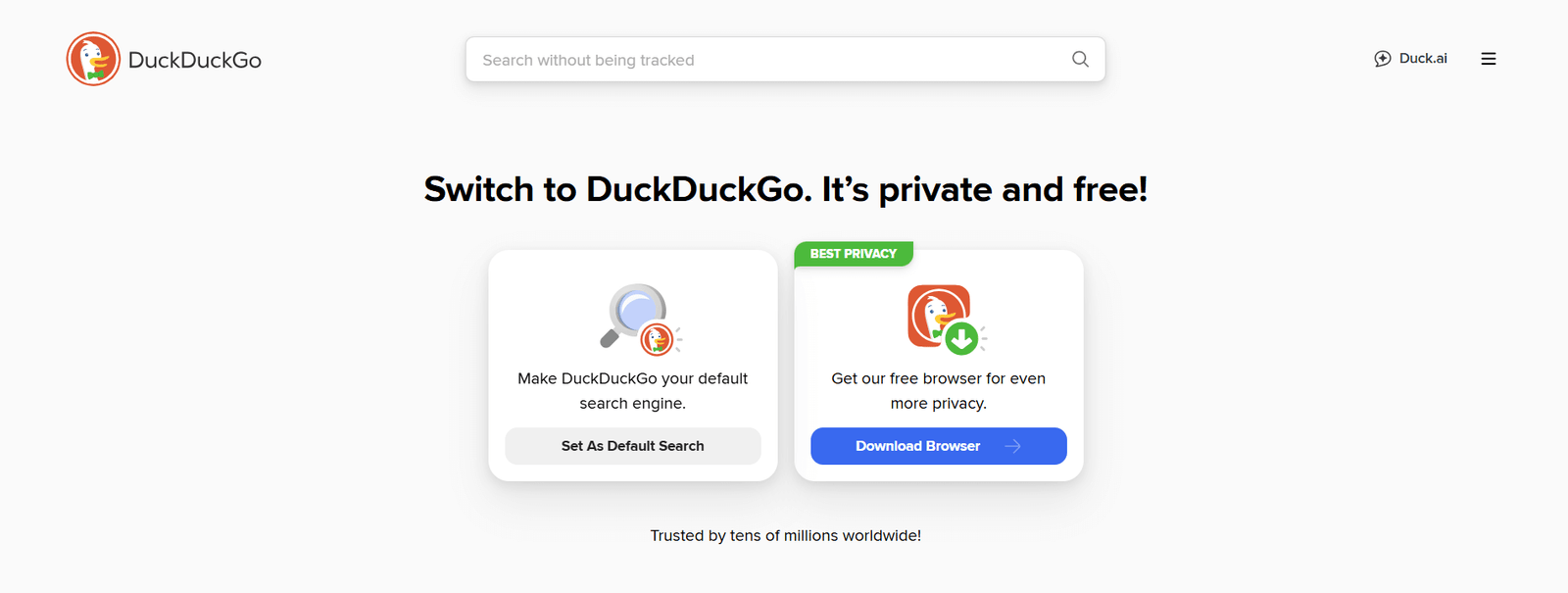
Best for: Absolute privacy fanatics who hate being tracked.
Website: duckduckgo.com
DuckDuckGo built its entire multi-million dollar empire on one simple promise: they do not track you. Ever. They don't store your history, they don't build a creepy profile on you, and they don't follow you around the internet.
- Strengths: Zero tracking, no personalized filter bubbles, a wonderfully clean interface, and snappy instant answers.
- Privacy: The gold standard. They don't log your IP address, and they aggressively block tracking cookies.
- Unique features: Their "!bang" shortcuts are legendary (type "!w" before your search to search Wikipedia directly), plus they actually grade other websites on how creepy their privacy policies are.
Further reading: Don't believe me? Go read DuckDuckGo’s Privacy Policy.
3. Brave Search
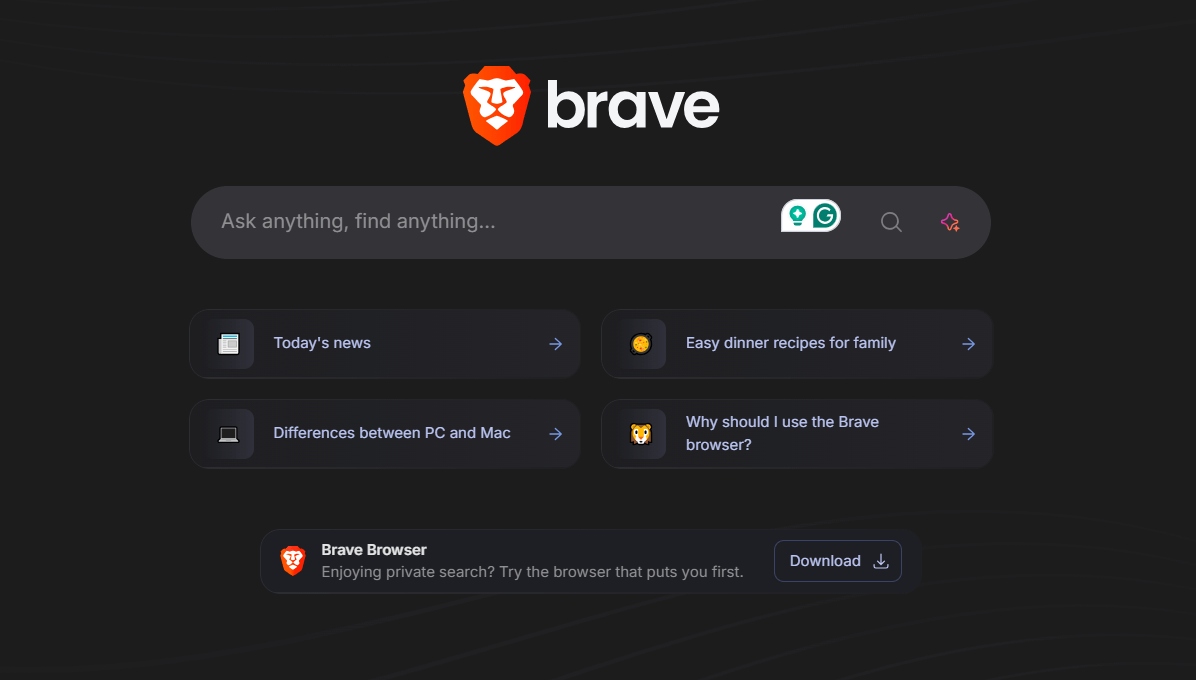
Best for: Open-source nerds who want a completely independent search index.
Website: search.brave.com
Built by the rebellious team behind the Brave browser, Brave Search is a massive deal because it actually uses its own independent web index. It doesn't secretly borrow results from Google or Bing like most other alternative engines do.
- Strengths: Completely independent results, open-source transparency, and a brilliant AI summarizer that doesn't feel overly intrusive.
- Privacy: Zero tracking and no search history logs. They are radically transparent about how their algorithm works.
- Unique features: The community actually helps rank the results, and if you hate ads entirely, you can pay a few bucks for a totally ad-free experience.
Pro tip: Brave Search is the default engine if you download the Brave browser, but you can use it on Chrome or Safari anytime.
4. Yahoo
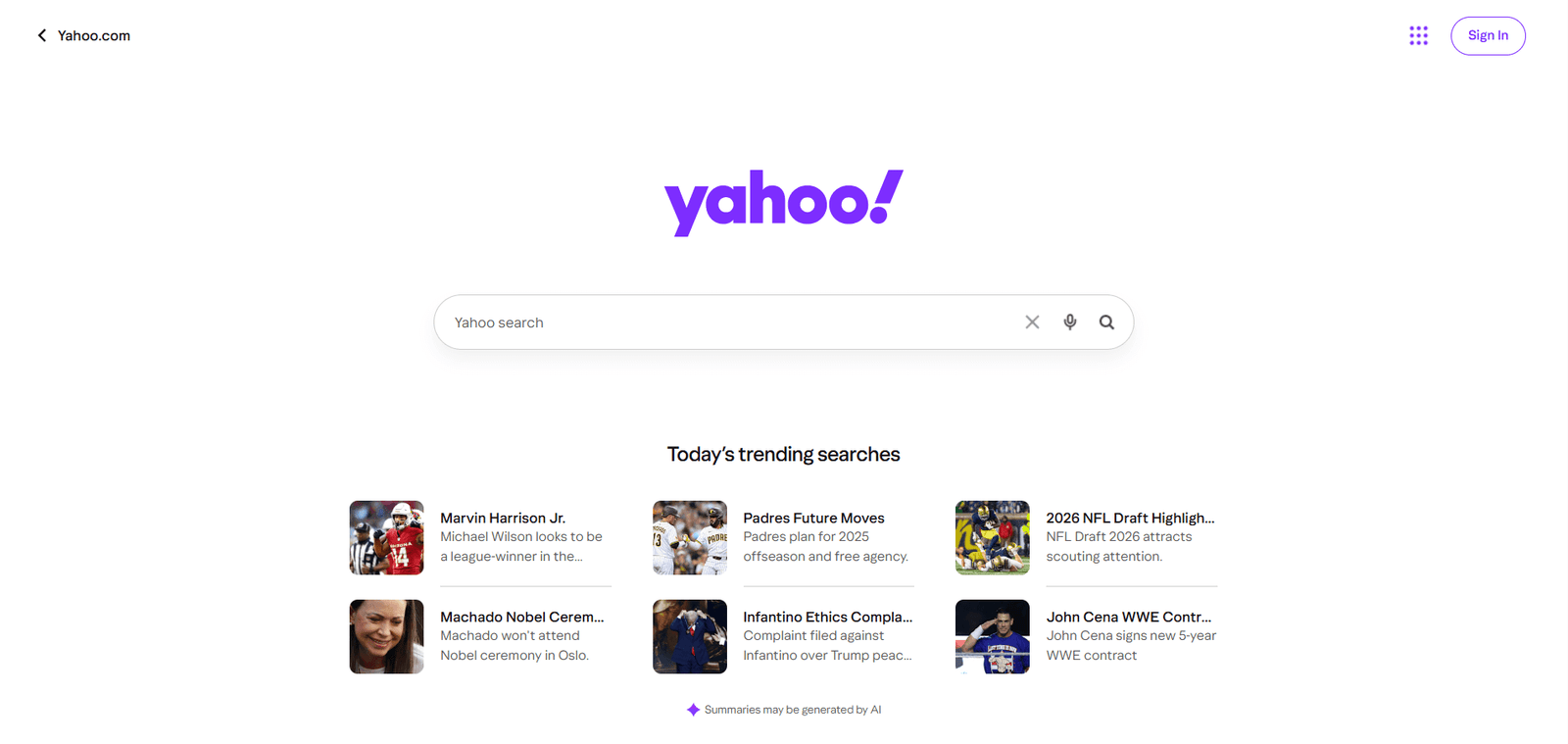
Best for: People who love a classic news portal and finance junkies.
Website: search.yahoo.com
Yes, Yahoo is absolutely still alive and kicking, especially in the US and Japan. Under the hood, their actual search results are just powered by Bing these days. But people stick around for the homepage experience—it’s a massive hub for breaking news, sports scores, and stock market data.
- Strengths: It feels familiar, the Yahoo Finance integration is legitimately excellent, and it's an easy all-in-one homepage.
- Privacy: Very low. They track you heavily for ad targeting, just like Google.
- Unique features: Heavy widgets for news and trending topics slapped right next to your search results.
5. Startpage
Best for: People who still want Google's results, but refuse to give Google their data.
Website: startpage.com
Startpage is brilliant. It basically acts as a digital middleman. When you type in a search, Startpage grabs the results from Google for you, strips away all your identifying data, and hands you the clean results. You get the world's best search algorithm without the creepy tracking.
- Strengths: You literally get Google-quality results, but with absolute privacy.
- Privacy: Flawless. They are based in the Netherlands (which has insanely strict privacy laws), and they don't log your IP address or use cookies.
- Unique features: "Anonymous View" is incredible—it lets you click a link and browse the target website through a proxy, so the website doesn't know you are there either.
Further reading: Dive into Startpage’s airtight Privacy Policy.
6. Swisscows
Best for: Parents who want a hyper-safe, family-friendly internet.
Website: swisscows.com
Based in the digital fortress that is Switzerland, Swisscows takes two things very seriously: absolute data privacy and keeping the internet safe for kids. It has a hard-coded, non-removable filter that blocks all explicit and violent content.
- Strengths: Phenomenal semantic search, zero tracking, and peace of mind if your kids are using the computer.
- Privacy: Swiss servers, no personal data collection, and absolutely no tracking.
- Unique features: They use cool visual "semantic maps" to help you narrow down vague searches, and the family filter is bulletproof.
7. Qwant
Best for: European users who demand strict EU data protection.
Website: qwant.com
Qwant is a slick French search engine built entirely around strict European neutrality laws. It doesn't profile you, which means two people searching for the same thing on Qwant will see the exact same unbiased results.
- Strengths: Total compliance with European data laws, no tracking, and a really vibrant, clean interface.
- Privacy: No cookies, no ad profiling, and all their servers are safely locked down inside the EU.
- Unique features: Dedicated tabs for social media chatter, plus "Qwant Junior," which is a locked-down version for schools and kids.
8. Ecosia

Best for: People who want to casually save the planet while browsing the web.
Website: ecosia.org
Ecosia is brilliant. Underneath, it uses Bing's search algorithm, but it takes the massive ad profits it generates and uses them to plant trees around the globe. You are literally reforesting the planet just by looking up muffin recipes.
- Strengths: You get to feel good about yourself, it's privacy-friendly, and the search results are highly reliable.
- Privacy: Much better than Google. They anonymize all your search data within days and don't sell it to third-party ad brokers.
- Unique features: A literal tree counter on your dashboard showing your personal impact, and radically transparent monthly financial reports.
Further reading: Read up on Ecosia’s Privacy Policy and their actual Tree Planting Impact.
9. Yandex
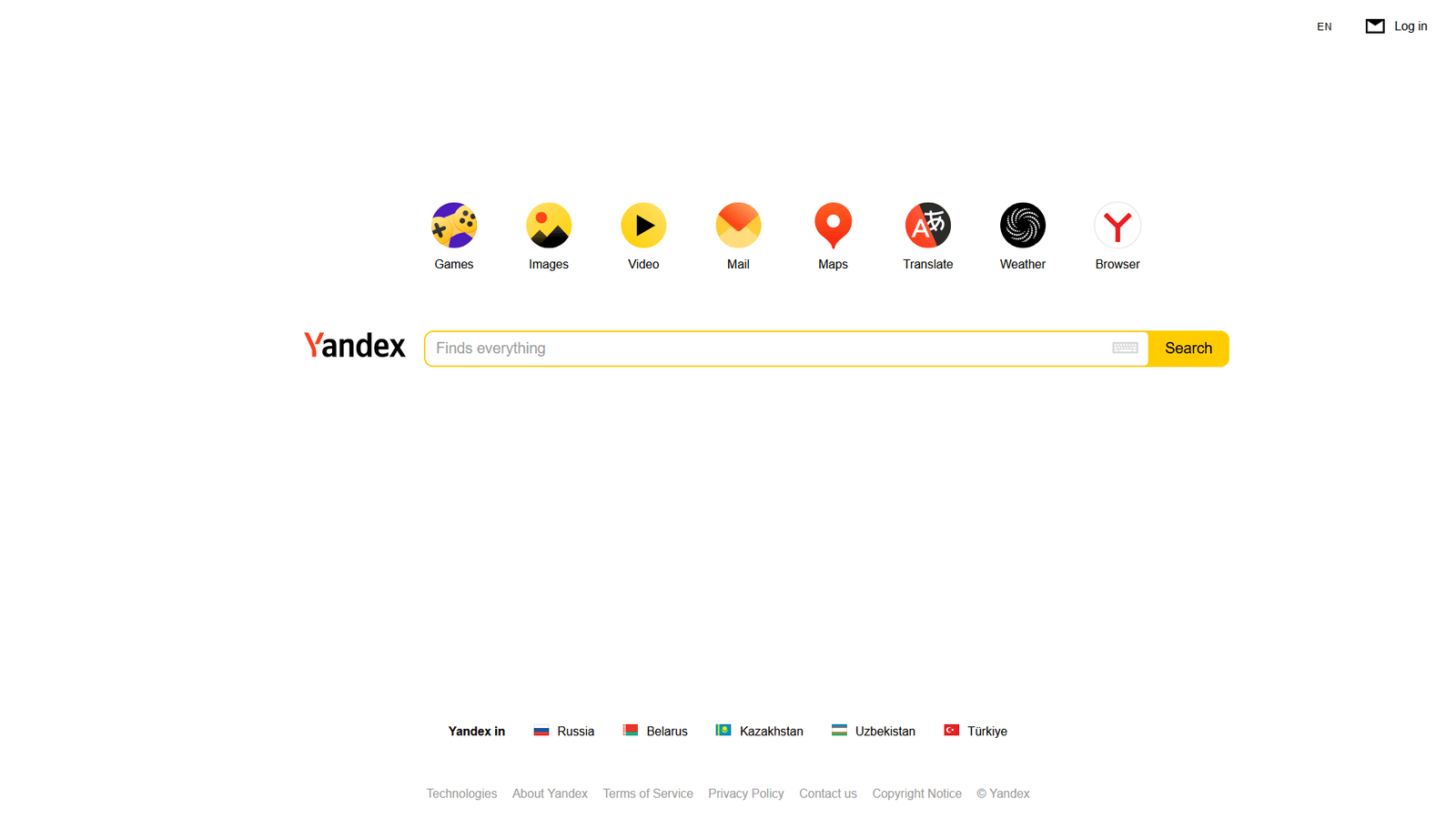
Best for: Anyone navigating Russian or Eastern European content.
Website: yandex.com
Yandex is basically the Google of Russia. It is a massive, incredibly sophisticated tech giant. If you are doing any sort of research in Cyrillic languages or need deeply specific Eastern European results, Google can't hold a candle to Yandex.
- Strengths: Phenomenal image and facial recognition search, perfect Cyrillic translation, and a massive ecosystem of local apps.
- Privacy: Terrible. Do not use Yandex if you care about privacy. They track and profile you extensively.
- Unique features: A deeply integrated suite of maps, music, and ride-hailing services localized entirely for that region of the world.
10. Mojeek
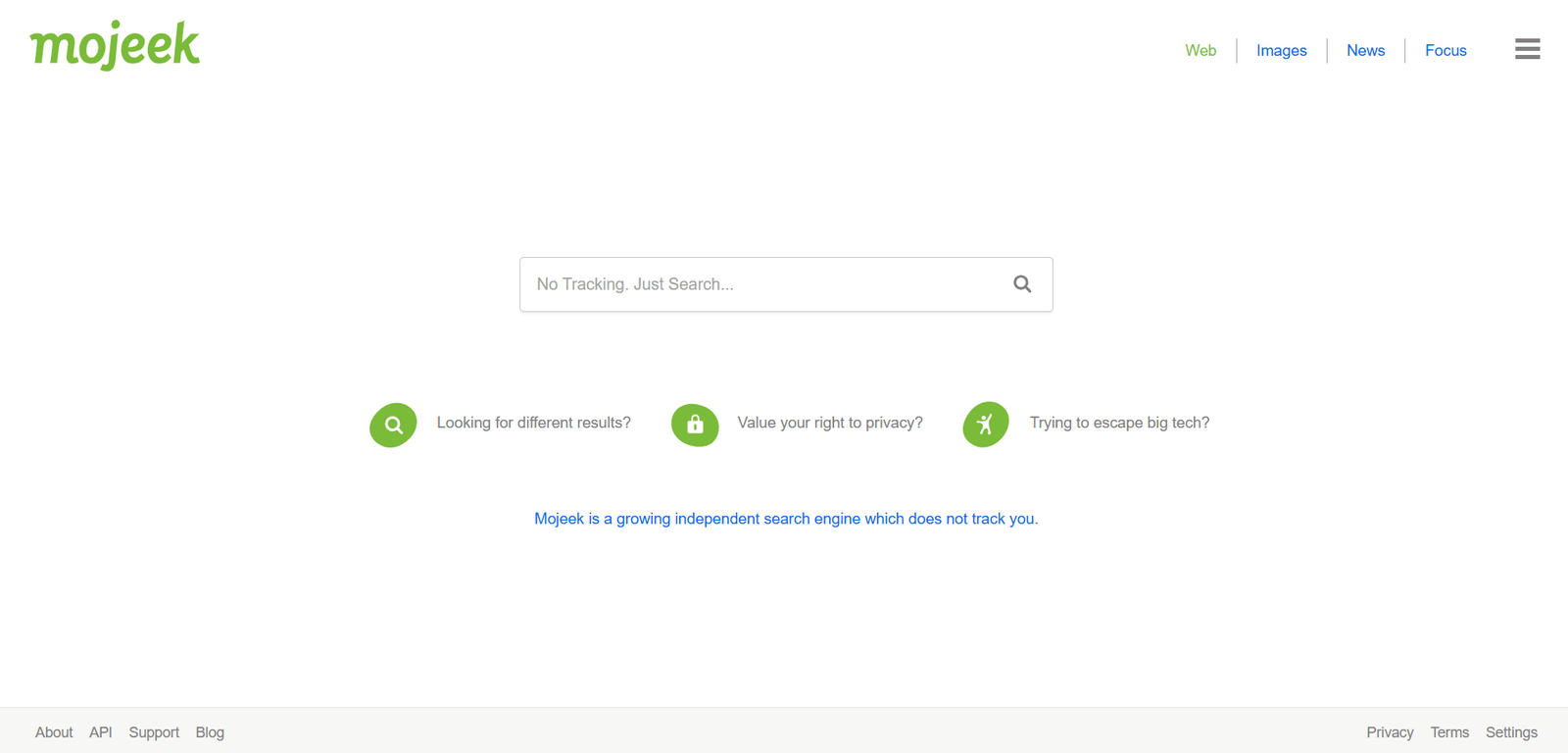
Best for: Hardcore tech purists who want a 100% independent crawler.
Website: mojeek.com
Mojeek is a rare breed. Based in the UK, they are one of the only companies on earth actively crawling the internet and building their own index from absolute scratch. They don't borrow a single line of code from Google or Bing.
- Strengths: You get a completely unfiltered, unique view of the web that isn't influenced by Silicon Valley giants.
- Privacy: Phenomenal. Zero logs, zero tracking, and no user profiling whatsoever.
- Unique features: "Emotional search" is wild—you can actually ask it to filter results based on whether the article makes people feel happy, angry, or sad.
Further reading: Check out Mojeek’s strict Privacy Policy.
Feature Comparison Table: Top Google Alternatives
| Search Engine | Independent Index | Privacy | Ads | Unique Feature |
|---|---|---|---|---|
| Bing | No (uses Microsoft index) | Moderate | Yes | AI Copilot, Rewards |
| DuckDuckGo | No (uses Bing/Yandex) | Excellent | Yes | !bangs, Privacy Grade |
| Brave Search | Yes | Excellent | Optional | Independent, Summarizer |
| Yahoo | No (uses Bing) | Low | Yes | News/Finance Portal |
| Startpage | No (proxies Google) | Excellent | Yes | Anonymous View |
| Swisscows | Partial | Excellent | No | Semantic Maps, Family Filter |
| Qwant | Partial | Excellent | Yes | European Data Laws |
| Ecosia | No (uses Bing) | Good | Yes | Tree Planting |
| Yandex | Yes | Low | Yes | Russian Content |
| Mojeek | Yes | Excellent | No | Emotional Search |
How to Choose the Best Search Engine for You

Don't overthink this. There is no perfect answer for everyone. Just ask yourself what annoys you the most about the internet right now:
- Paranoid about Privacy? Immediately switch your default to DuckDuckGo, Startpage, or Brave Search. Stop giving your data away for free.
- Need Raw Power? If you are doing heavy research and need billions of results, Bing or Startpage (since it pulls from Google) are your best bets.
- Want to Escape the Matrix? If you want to see what the internet looks like without Google's heavy filter, use Brave Search or Mojeek.
- Got a Specific Vibe? Use Ecosia if you feel guilty about your carbon footprint, or Swisscows if you have an iPad you share with your toddlers.
- Doing Regional Research? Yandex is mandatory for Russian searches, and Yahoo is still weirdly great for US finance news.
Pro tip: You don't have to marry one. Put DuckDuckGo on your phone, use Brave on your laptop, and keep Bing around for AI chat.
How to Switch Your Default Search Engine
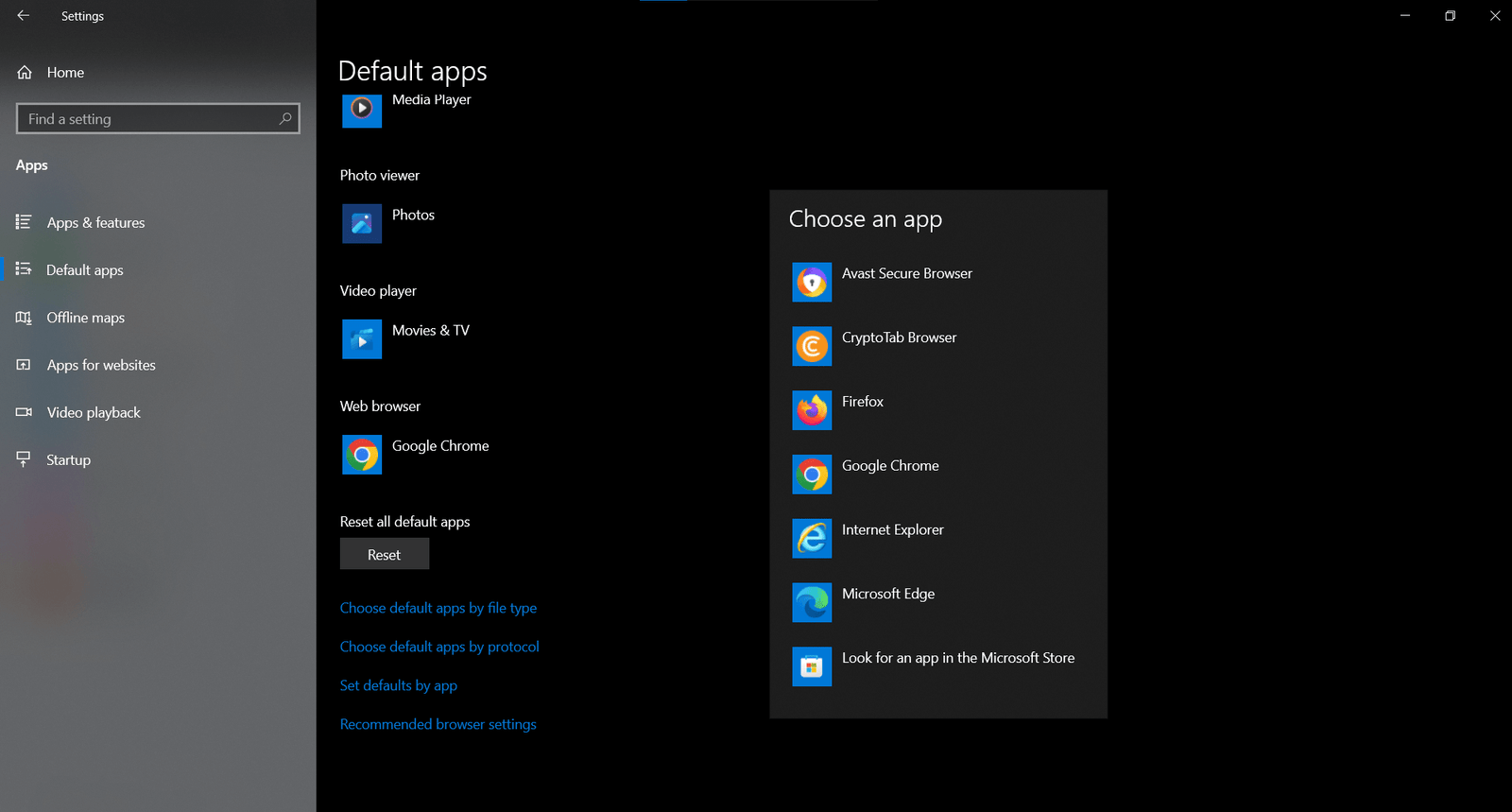
Ditching Google takes literally five seconds. Here is how you do it on the major browsers:
- Chrome: Hit Settings > Search Engine > Manage Search Engines. Pick your new favorite from the dropdown menu.
- Firefox: Go to Preferences > Search > Default Search Engine. Click it and forget it.
- Edge: Open Settings > Privacy, Search, and Services > Address Bar and Search. Swap it over to Bing or whatever else you want.
- Safari: Click Preferences > Search. Just pick the one you want from the quick list.
Most of these alternative engines also have their own dedicated mobile apps that block trackers automatically. Download them on your phone.
Pros and Cons of Using Search Engines Other Than Google
| Pros | Cons |
|---|---|
| You instantly stop feeding the massive tracking machine. | The smaller, independent indexes sometimes miss highly obscure, specific results. |
| You break out of your echo chamber and see different sources. | They usually don't have deeply integrated Google Maps or fancy shopping tabs. |
| Way less visual clutter and far fewer aggressive ad blocks. | Some of the smaller engines are a bit slower to integrate heavy AI features. |
| You get to support smaller tech teams fighting monopolies. | If you travel, some regional engines might struggle to give you local restaurant tips. |
AI and the Future of Search Engines
Make no mistake, we are in the middle of an absolute AI bloodbath in 2026. Traditional links are dying. Google, Bing, and Brave are aggressively pushing AI-generated summaries that try to answer your question before you even click a website. Meanwhile, the smaller indie engines are fighting back by focusing entirely on human-curated results and total privacy.
Expect this gap to widen. You are going to have to choose between massive AI assistants that know everything about you, or stripped-down, ultra-private search engines that just give you the raw internet.
Further reading: Want to see where this is all heading? Read Search Engine Journal’s AI Search Engine Guide to peek into the future.
FAQ: Best Search Engines Other Than Google
Which search engine is genuinely the best for privacy?
It's a tight race between DuckDuckGo, Startpage, Brave Search, and Mojeek. None of them track you, store your history, or build a weird psychological profile to sell to advertisers. Startpage gets a special nod because it somehow gives you Google's exact results while keeping you completely anonymous.
Are these alternatives actually as good as Google?
Honestly? For 95% of your daily searches (like looking up weather, news, or a Wikipedia page), yes, they are completely identical. Google still wins if you are trying to find a highly obscure local plumber in a tiny town, but the gap is closing fast.
Can I just use more than one?
Absolutely. The smartest users flip between them. Keep a privacy engine as your default, and just type "Google.com" on the rare occasion you can't find what you are looking for.
Do alternative search engines still show ads?
Yes, servers aren't free to run. But the ads are usually based strictly on the keyword you just typed, not your entire browsing history from the last five years. Plus, they are way less visually aggressive than Google's current layout.
Which one is the best for hardcore research?
If you are writing a thesis, use Brave Search or Mojeek. Because they run their own independent indexes, they won't feed you personalized, filtered fluff. Startpage is also fantastic because you get the raw, unfiltered power of Google's academic indexing without the tracking bias.
Ready to Try a Google Alternative?
Listen, swapping out your default search engine is literally a five-second change that has a massive impact on your digital life. Whether you are desperate to stop the creepy ad tracking, tired of the visual clutter, or just want to see what else is out there, you have incredible options in 2026.
Stop overthinking it. Pick one from this list—maybe DuckDuckGo or Brave—and just force yourself to use it for exactly one week. You will be shocked at how quickly you stop missing Google.
If you are building a website and want to know how to actually rank on all these different platforms, spend your afternoon digging into our guides on Keyword Research, dominating Search Engine Positioning SEO, and balancing your SEO Onpage VS Offpage Optimization strategy.