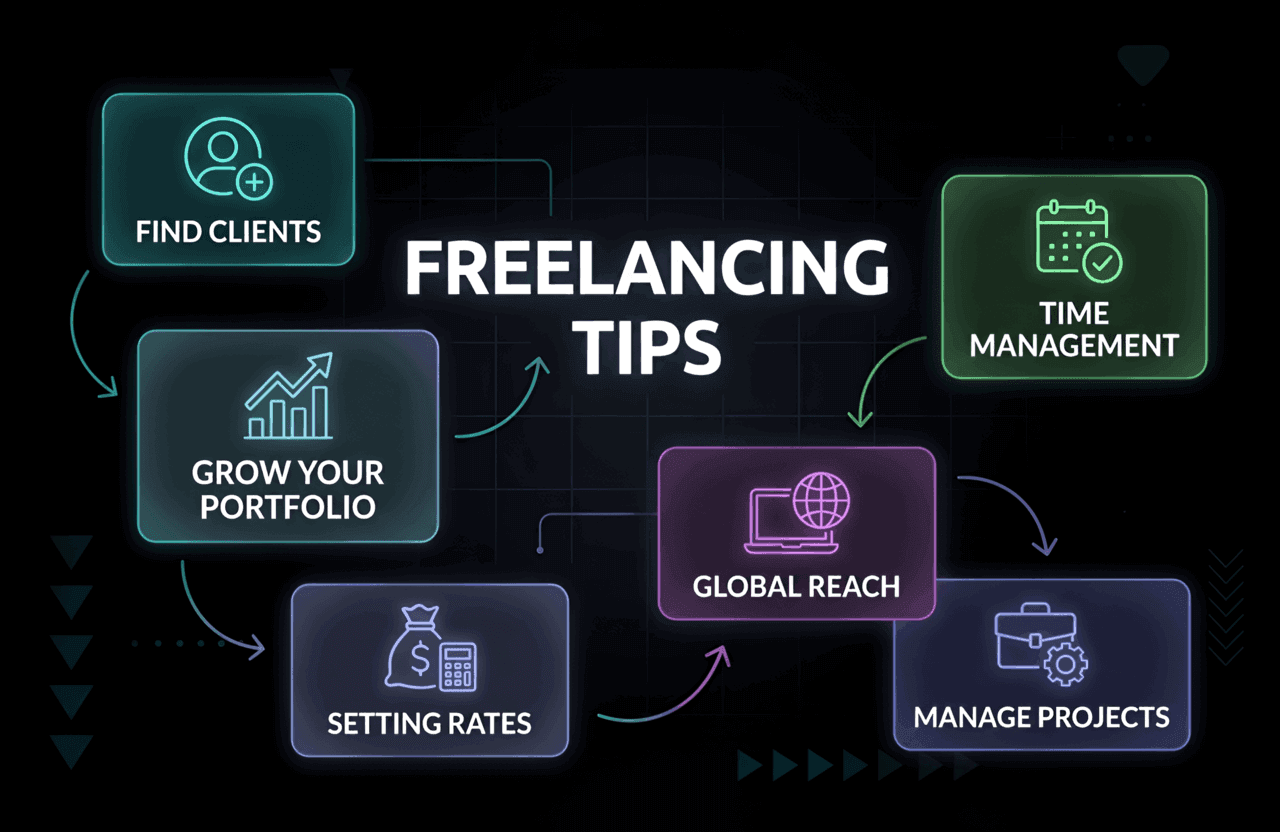
Let's get straight to the point. The internet has lied to you about freelancing. It is not about sitting on a beach in Bali with a laptop, drinking from a coconut, and working two hours a day. If that is what you are looking for, close this page right now. Freelancing is a bloodbath. It is running a business where you are the CEO, the janitor, the marketing department, and the product all at once.
Most freelancers fail within the first year. They fail because they treat it like a hobby, they charge like amateurs, and they have absolutely no idea how to handle clients. They rely on generic, recycled advice that stopped working in 2018. If you want to survive and actually make serious money, you need to completely rewire how you operate.
You searched for "How do I get good at freelancing", which means you are either struggling to get clients, or the clients you have are burning you out. I am going to rip open the exact playbook on how to build a bulletproof freelance business. No fluff, no "follow your passion" nonsense. These are the absolute best freelancing tips you will ever read to stop being a starving artist and start acting like a highly-paid consultant.
Quick tip: Do not quit your day job until your freelance income consistently covers your baseline expenses for at least three months. Desperation is obvious to clients, and it will force you to accept garbage rates. Build the foundation first.
1. Stop Charging Hourly (The Value Trap)
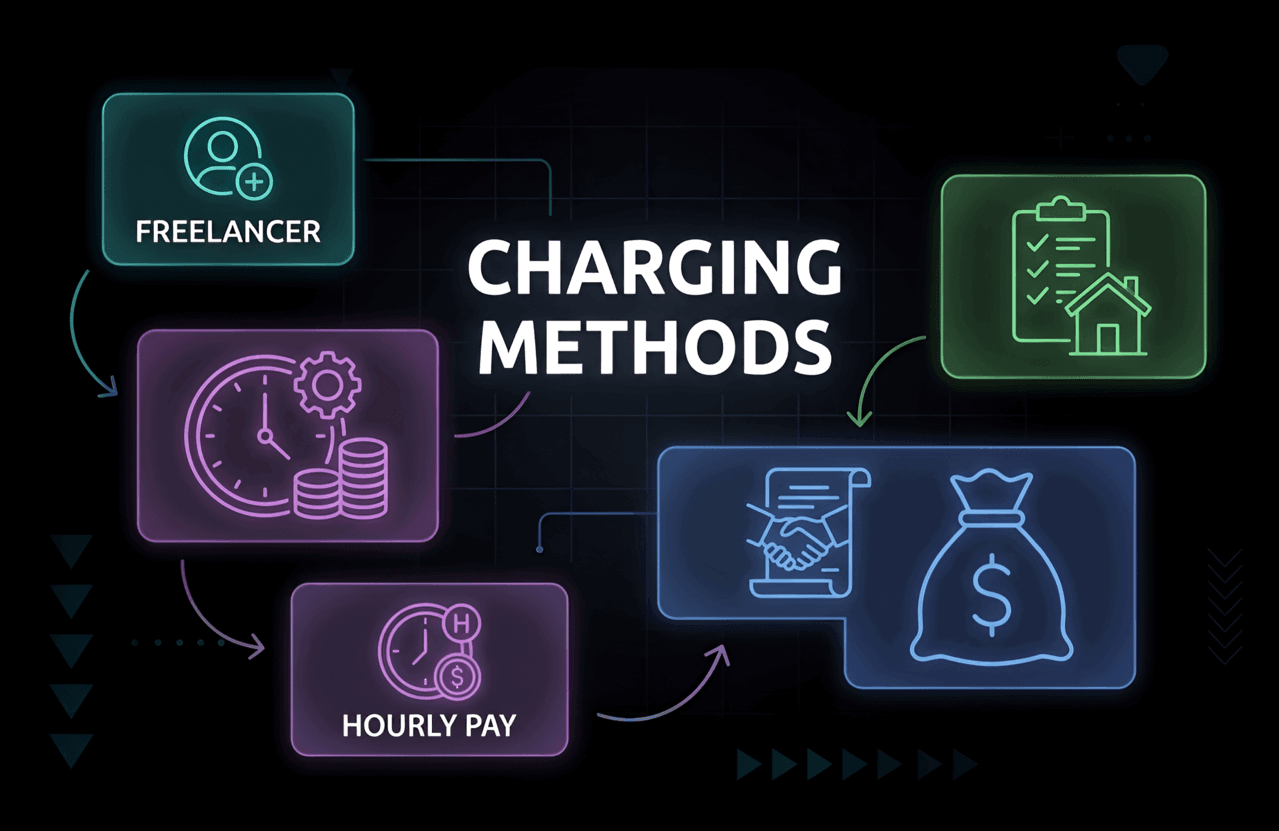
This is the number one mistake killing your freelance career. Charging by the hour is a trap designed for employees, not business owners. When you charge hourly, you are literally punishing yourself for getting better at your job.
Think about it. If you build a website in 40 hours at $50 an hour, you make $2,000. Fast forward two years. You are an expert. You have templates, systems, and experience. You build that exact same high-quality website in 10 hours. At $50 an hour, you now make $500. You got faster, your client got the result quicker, and you lost $1,500. That is incredibly stupid.
You need to transition to Project-Based or Value-Based pricing immediately.
- Project-Based: You quote a flat fee for the entire deliverable. "I will build your 5-page e-commerce site for $3,500." The client knows exactly what they will pay, and if you do it in 5 hours, your effective hourly rate just skyrocketed.
- Value-Based: You charge based on the financial outcome you generate for the client. If your sales copy is going to make the client $100,000 in revenue, charging $10,000 is a steal for them, regardless of how long it took you to write it.
2. Niche Down Until It Hurts
Generalists starve. Specialists get wealthy. Look at your current portfolio or bio. Does it say something like "I do web design, graphic design, social media, and SEO"? If it does, you look like an amateur who is desperate for any scrap of work.
When a high-paying client has a specific problem, they do not want a jack-of-all-trades. If a real estate agency needs a new website, they don't want a "web designer." They want a "Web Designer specializing in lead generation for high-end real estate."
Niching down feels terrifying because you think you are turning away potential clients. You aren't. You are filtering out the cheap, nightmare clients and acting as a magnet for premium buyers who are willing to pay a premium for a specialist.
How to Pick a Profitable Niche:
- By Industry: Plumbers, SaaS companies, dentists, e-commerce brands.
- By Platform/Tool: Shopify developer, Webflow designer, Facebook Ads media buyer.
- By Problem: "I help B2B software companies reduce customer churn through onboarding email sequences."
Further reading: Want to prove you are an authority in your niche? Stop relying entirely on freelance platforms. Build your own asset. Read our hardcore, step-by-step guide on How to Start a Blog Step-by-Step for Beginners to attract inbound clients.
3. Your Portfolio is Garbage (How to Fix It)
Nobody cares about your life story. Nobody cares what university you went to. Clients only care about one thing: Can this person solve my problem and make my life easier?
Most freelance portfolios are just a messy gallery of screenshots with zero context. A pretty picture of a logo or a code snippet means absolutely nothing to a business owner. You need to transition from a "gallery" to a "case study" format.
The Anatomy of a Perfect Case Study:
- The Problem: What was the client struggling with before they hired you? (e.g., "Company X had a conversion rate of 0.5% and was burning money on ads.")
- The Solution: What exact steps did you take? Don't use heavy jargon, explain the business logic. (e.g., "I redesigned the checkout flow to remove friction and rewrote the primary call-to-action.")
- The Result: Hard data. Numbers. Percentages. (e.g., "Conversion rate increased to 2.1%, resulting in an extra $40,000 in monthly recurring revenue.")
If you do not have past client data, make it up for a mock project. Redesign a terrible local business website, write out the case study, and use that. Just be honest that it is a conceptual piece. The logic is what sells.
4. Cold Outreach That Actually Works
Sitting on Upwork or Fiverr waiting for the algorithm to bless you is a terrible business strategy. You are competing in a race to the bottom against thousands of people willing to work for $3 an hour. You need to take control of your lead generation through cold outreach.
But your cold emails probably suck. If you are sending messages that start with "Dear Sir/Madam, I am a freelance writer with 5 years of experience..." you are going straight to the spam folder.
The Framework for High-Converting Cold Pitches:
- The Pattern Interrupt (Subject Line): Keep it short and relevant. "Quick question about [Company Name]'s blog" or "Idea for your Q3 ad creatives."
- The Hook: Prove you actually looked at their business. "Hey [Name], I noticed your recent LinkedIn post about expanding into the European market. Awesome move."
- The Problem Identification: Point out a flaw gracefully. "I was checking out your landing page and noticed the load time is dragging, which might be killing your mobile conversions."
- The Value Proposition: "I specialize in optimizing WordPress speed for SaaS brands. I actually ran an audit on your site and found 3 quick fixes."
- The Low-Friction Call to Action: Do NOT ask for a 30-minute call. Nobody has time for that. Ask a simple yes/no question. "Mind if I send over a quick 2-minute Loom video showing you what I found?"
Send 10 of these highly personalized emails a day. You will get clients. It is simple math.
Further reading: If you are building websites for clients, they will eventually ask you about getting traffic. Don't look like an amateur. Bookmark our brutal breakdown of the SEO For New Website Checklist to add massive value to your deliverables.
5. Client Management is 80% of the Job
Being a good writer, coder, or designer is only 20% of freelancing. The other 80% is managing the human beings paying you. If you cannot manage expectations, you will be miserable.
The biggest killer of freelance businesses is Scope Creep. This is when a client slowly adds "just one more tiny thing" to the project until you are doing double the work for the exact same pay.
How to establish total dominance and boundaries:
- The Ironclad Contract: Never start work without a contract. Your contract must explicitly state what is included, how many revisions are allowed, and exactly what happens if they request extra work. "Any requests outside the outlined deliverables will be billed at a rate of $100/hour." Watch how fast those "tiny tweaks" disappear.
- The Onboarding Document: When a client signs, send them a PDF explaining exactly how you work. Tell them your working hours, how long you take to respond to emails (e.g., 24-48 hours), and that you do not accept text messages on weekends.
- Fire Bad Clients Immediately: If a client is abusive, constantly late on payments, or disrespects your boundaries, fire them. Do not hesitate. The mental energy you waste on one nightmare client is preventing you from finding three great ones.
6. Stop Ignoring the Business Side (Taxes, Invoices, Pipelines)
You are not just a creative professional; you are a business. If your accounting consists of a messy Excel sheet and a personal PayPal account, you are setting yourself up for an absolute disaster come tax season.
- Separate your finances: Open a dedicated business checking account today. Never mix personal and business funds. It makes bookkeeping a nightmare and destroys your liability protection if you have an LLC.
- Get a real invoicing system: Stop sending Word document invoices. Use software like Stripe, Wave, or FreshBooks. These systems automatically send follow-ups to clients who haven't paid. Let the software be the bad guy nagging them for money, not you.
- Require upfront payments: Never, ever do 100% of the work before getting paid. Standard practice is 50% upfront to lock in the calendar slot, and 50% upon final delivery. If a client refuses to pay a deposit, they were planning on scamming you anyway. Good riddance.
Pro tip: Freelancing can be unpredictable. You need to build a system that generates a baseline income every single day to cover your software and hosting costs. Check out our raw guide on How To Earn $100 Per Day using scalable methods outside of client work.
7. Adapt to AI or Get Crushed
Let's talk about the elephant in the room: Artificial Intelligence. If you are a freelance writer, graphic designer, or basic coder, and you are ignoring ChatGPT, Claude, or Midjourney, you will be obsolete by next year.
Clients are not going to pay you $500 to write a generic 1,000-word blog post that an AI can generate in 12 seconds. The bottom tier of freelancing is completely dead.
However, the top tier is exploding. You need to pivot from being an "implementer" to being a "director." Use AI to speed up your workflow by 10x, but apply your human strategy, taste, and quality control.
- If you write, use AI for outlining, ideation, and overcoming blank-page syndrome. Then, inject the human emotion, the brand voice, and the high-level strategy that AI cannot replicate.
- If you code, use AI to write the boilerplate, find bugs, and explain complex documentation.
The freelancers who survive will be the ones who become absolute masters at directing AI to do the heavy lifting.
Further reading: Do not just type basic questions into an AI and expect magic. You need to learn how to engineer the output. Master the machine by reading the Best Way To Write a Prompt.
8. Create Recurring Revenue to Survive the "Famines"
The freelance lifecycle is historically a "Feast or Famine" cycle. One month you make $10,000 and feel like a god. The next month you make $400 and panic-apply to barista jobs. You have to break this cycle.
You break it by forcing Recurring Revenue into your business model. Do not let clients disappear after one project. Upsell them into a monthly retainer.
Examples of Freelance Retainers:
- Web Designer: "The website is built, but WordPress needs constant security updates, plugin management, and backups. I offer a $150/month care plan so your site never gets hacked."
- Copywriter: "The sales page is done. To keep momentum, you need an email newsletter. I will write 4 emails a month for $800."
- SEO Specialist: "The on-page optimization is done. Now you need authority. I will secure 3 high-quality backlinks per month for $1,200."
If you get just five clients paying you $500 a month on a retainer, you have a baseline of $2,500 hitting your bank account every 30 days regardless of whether you land a new big project or not. That is the secret to freelance peace of mind.
Pro tip: Want to know how to actually execute that SEO retainer example? You need to know how to manipulate off-page authority. Read exactly How To Get Backlinks For Your Website without getting penalized by Google.
9. Diversify Your Income Streams
Relying 100% on client work is dangerous. If you get sick, if you want a vacation, or if the economy tanks and clients freeze their marketing budgets, your income drops to zero. You are trading time for money. To truly get good at freelancing, you need to build assets that pay you while you sleep.
Take the skills you use for clients and apply them to your own projects. If you know how to build websites, build a niche affiliate site. If you know how to run ads, run ads to CPA (Cost Per Action) offers. If you know how to design, sell premium UI kits or templates.
Every hour you spend building your own digital assets is an hour invested in your eventual freedom from client demands.
Further reading: Don't know what a CPA offer is? It is one of the most aggressive ways to monetize traffic without dealing with customer service. Learn the mechanics in our breakdown: What Are CPA Offers?
The Harsh Conclusion: Take Action Now
Reading a list of "freelancing tips" will not put money in your bank account. Action does. The internet is full of "wantrepreneurs" who read 50 articles a day, tweak their logo colors for three weeks, and never actually pitch a single client.
Stop overcomplicating it. You do not need a perfect website. You do not need an LLC to send your first invoice. You need to pick a valuable skill, identify a specific group of people who have money and need that skill, and put an offer in front of their faces.
Here is your homework for the next 24 hours:
- Rewrite your bio to target one specific niche.
- Raise your prices by 30%. You are probably undercharging anyway.
- Find 5 businesses that have terrible websites or copy, find the owner's email, and send the cold pitch framework outlined above.
Freelancing is the ultimate meritocracy. Nobody cares about your background. If you can deliver results, you will get paid. If you make excuses, you will starve. Stop reading. Start pitching. Treat this like a real Business, figure out your Monetization strategy, and go close a deal.