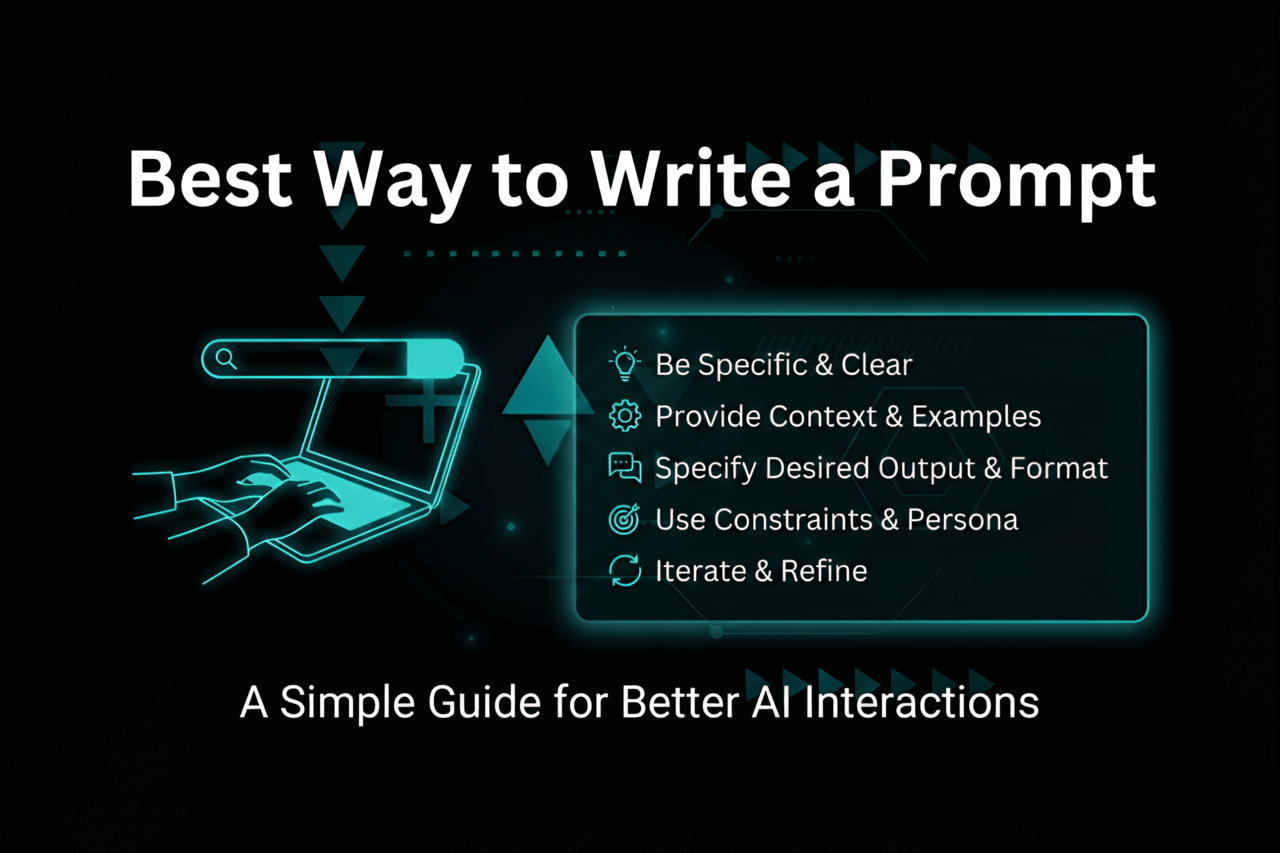
Let's get one thing straight. If you open ChatGPT, type "write a blog post about marketing," and hit enter, you are the exact reason AI generates robotic garbage. In 2026, these language models do not magically read your mind. They are literal prediction engines. If you feed them lazy, three-word instructions, they will spit out generic, heavily hallucinated trash that actively hurts your brand.
Stop treating AI like a magic 8-ball. The professionals making actual money right now treat prompt engineering like writing raw computer code. You have to spoon-feed the machine with ruthless clarity, aggressive constraints, and military-grade structure.
If you want to stop getting terrible outputs, you have to change how you talk to the machine. I am going to rip apart the exact frameworks the pros use to force AI models, search engines, and generative tools to give them exactly what they want on the very first try.
Stop guessing. Let's lock down your prompt strategy.
Pro tip: The AI is a mirror. Garbage in, garbage out. If the output sucks, it is not the AI's fault; your prompt was just lazy. Treat prompting as a strict coding language, not a casual text message.
Why Prompts Matter in 2025
These massive AI models are incredibly smart, but they are also completely blind. They lack context. If you don't build a rigid fence around what you want, they will wander off and hallucinate.
Here is why you cannot afford to ignore this skill:
- Context is everything: GPT-4, Gemini, and Claude do not know who your audience is. Unless you explicitly define the tone, the boundaries, and the format, they will default to a boring, robotic voice.
- Search is dead as you know it: AI answer engines scrape the web completely differently now. The exact phrasing you use dictates if your content gets pulled into the AI overview. Survive this by understanding search engine positioning.
- Precision is non-negotiable: You can't ask an AI to write a Python script by saying "make an app." You have to define the libraries, the error handling, and the exact syntax you expect.
- It is a literal, high-paying career: Tech companies are paying massive salaries to "Prompt Engineers" simply because normal employees refuse to learn how to constrain the models properly.
Did you know? Stop thinking this is a fad. Look at the raw data. Prompting is the most aggressively demanded skill in the modern job market right now (OpenAI Research).
What Makes a Prompt Effective?
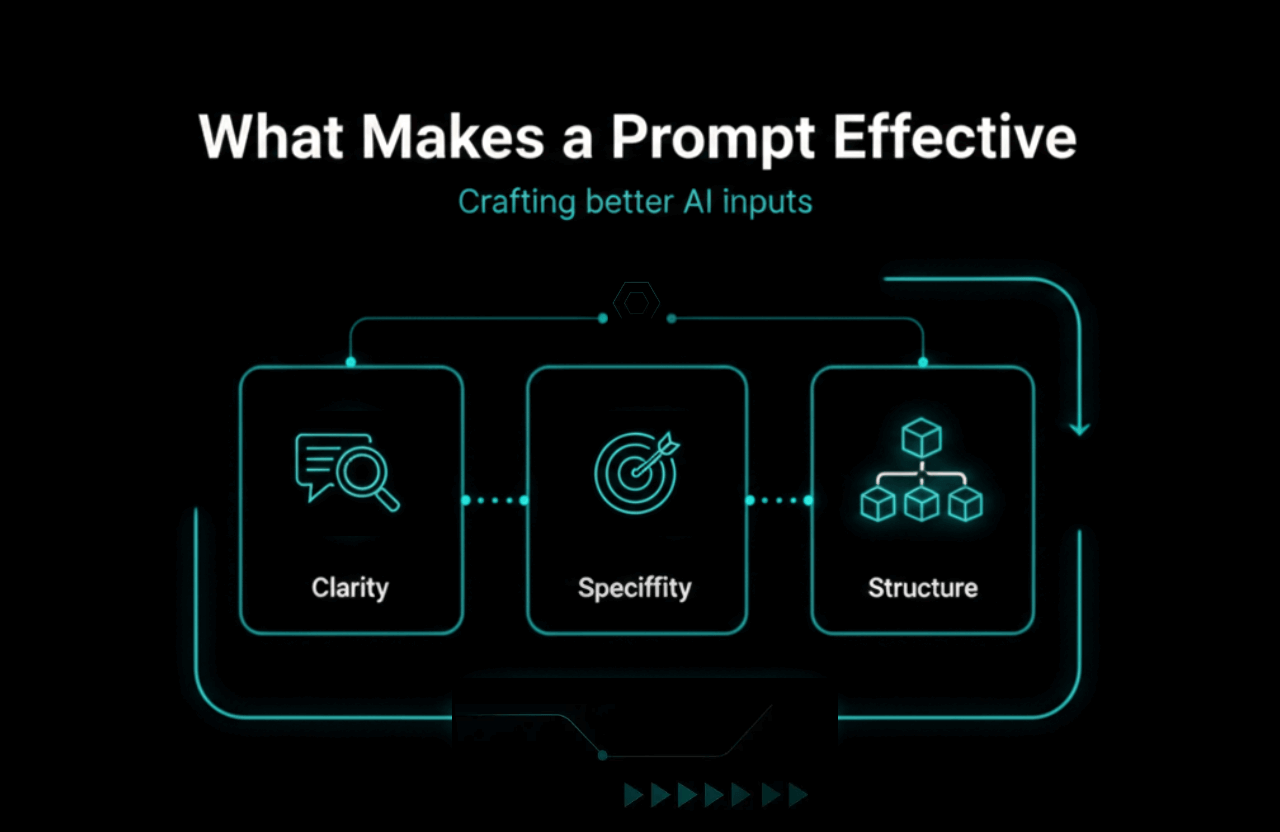
There are exactly three rules. If you break them, your output will fail:
- Clarity: Stop using flowery, polite language. The AI doesn't care if you say "please." Command it directly.
- Specificity: Give it an iron-clad border. Tell it exactly how many words to write, what format to use, and who the target audience is.
- Structure: Do not write a messy, rambling paragraph. Use bullet points and numbered lists to separate your instructions.
Let's look at how bad most people are at this.
Clarity in Action
Weak, terrible prompt: "Tell me about climate change."
Hardcore prompt: "Summarize the top three causes of climate change in exactly 100 words. Use only data from 2026 scientific research papers."
The second prompt physically forces the AI to stay within a strict word count and source requirement.
Specificity in Action
Weak, terrible prompt: "Write a blog post about SEO."
Hardcore prompt: "Write a brutal, 500-word blog post for beginners. Explain the hard difference between on-page and off-page SEO. You must include three real-world examples."
Now the AI knows the audience, the tone, the length, and the mandatory examples.
Structure in Action
If you have a massive task, do not dump it into one sentence. Format it like code:
1. List five massive mistakes in prompt writing. 2. For every mistake, give a strict one-sentence explanation. 3. Suggest a highly actionable solution for each mistake.This guarantees the AI won't skip part of your request.
Step-by-Step Framework for Writing Prompts
Stop winging it. Use this exact workflow every single time you open a chat window:
1. Define Your Objective
What is the actual end goal? Do you need a raw Python script? A sarcastic email? A data table? Decide before your hands touch the keyboard.
2. Provide Context
The AI does not know you. Tell it exactly who it is pretending to be.
Example: "You are a ruthless HR manager at a tech startup. Draft a brutal job description for a remote frontend developer."
3. Use Clear and Specific Language
Stop using adjectives. Use hard numbers and exact formats.
Example: "Give me exactly 10 actionable tips to speed up WordPress. Each tip must be exactly one sentence."
4. Structure the Prompt Logically
Use steps. Force the AI to follow a linear path.
Example:
Step 1: Summarize the main argument of this article in exactly 50 words. Step 2: Extract two hard data points from the text. Step 3: Write one highly controversial question based on those data points.5. Include Examples if Needed
This is called "Few-Shot Prompting." Don't just tell it what to do. Show it.
Example:
Input: 'Explain blockchain to a 10-year-old.' Desired Output: 'Blockchain is like a digital notebook that everyone can see and write in, but no one can ever erase or change what is already written.'6. Review and Refine
If the AI gives you garbage, it means your instructions were weak. Tweak the prompt. Lock down the constraints tighter. Run it again.
Pro tip: When you finally nail a prompt that works perfectly, save it to a master document. Build an arsenal of vetted prompts so you never have to guess again.
Prompt Writing for Different Use Cases
You cannot use the same prompt strategy for coding as you do for copywriting. Adjust your attack:
1. Prompts for Generative AI (ChatGPT, Gemini, Claude)
- Force the persona: "Act as a senior, highly cynical copywriter..."
- Lock the boundaries: "Do not exceed 150 words under any circumstances."
- Demand a format: "Output the entire response inside an HTML table with three specific columns."
2. Prompts for Search Engines and Answer Engines
- Stop typing vague keywords. Ask highly specific, direct questions: "What is the hard, technical difference between dofollow and nofollow backlinks?"
- Dominate the exact intent by mastering keyword research.
3. Prompts for Creative or Collaborative Tasks
- Dictate the exact vibe: "Write a darkly comedic poem about sitting in pointless Zoom meetings."
- Force unusual combinations: "Generate 10 insane business ideas combining eco-friendly products with AI."
4. Prompts for Coding and Technical Tasks
- Be brutally technical: "Write a Python 3.10 function using Pandas to clean this exact dataset."
- Demand documentation: "You must write inline comments for every single line of code you generate."
Real Examples of High-Performing Prompts
Stop guessing. Steal these exact prompts. They actually work in the real world:
Content Creation
"Write a 300-word introduction for a blog post titled 'Best way to write a prompt'. Target beginner marketers. The tone must be aggressive but educational. You must include one surprising statistical fact about AI."Research and Summarization
"Summarize the key findings from the leaked 2026 Google Search API documents. Output exactly 5 bullet points. Only focus on data relevant to content creators. Ignore the rest."Technical Documentation
"Generate a strict, step-by-step guide for installing WordPress on an Ubuntu 22.04 server. You must provide the exact raw terminal commands and write a one-sentence explanation under each command."Creative Brainstorming
"List 10 highly unconventional ways a local plumbing business can use AI chatbots to hijack competitors' traffic. Write a strict one-sentence description for each idea."SEO and Marketing
"Build a comparison table of the top 5 free plagiarism checker tools. The columns must be exactly: 'Tool Name', 'Core Features', 'Biggest Flaw', and 'Best Use Case'."Common Mistakes and How to Avoid Them
You are probably making every single one of these amateur mistakes right now:
- Being too vague: Saying "Write something about SEO" is useless. The AI will output generic Wikipedia-level trash.
- Overloading the context window: Dumping a 40-page PDF into the chat and yelling "fix this" will cause the AI to hallucinate wildly. Break it into chunks.
- Ignoring format commands: If you want a list, tell it to write a list. If you want a CSV file, demand a CSV file.
- Accepting the first draft: The first output is always basic. Critique the AI. Tell it what it did wrong and force it to rewrite it better.
- Assuming it understands your tone: It doesn't. You have to explicitly tell it not to sound like a robot.
Further reading: Want to understand exactly why the machine is failing you? Dig into the hardcore mechanics at the Prompting Guide AI and read our brutal breakdown of the ChatGPT Language Model Explained.
Advanced Tips for Prompt Optimization
- Chain-of-thought prompting: Force the AI to show its work. Add "Think step by step before answering" to your prompt. It mathematically reduces logical errors.
- Role prompting: Never skip this. "You are an elite, 20-year veteran SEO consultant." It entirely changes the vocabulary the AI uses.
- Few-shot prompting: Hand-feed the AI three perfect examples of what you want before asking it to do the actual task. It completely eliminates guesswork.
- Temperature control: If you use the API, drop the temperature to 0.1 for hard coding tasks so it stops hallucinating. Crank it to 0.8 for creative brainstorming.
- Prompt chaining: Stop asking for a 2,000-word article in one prompt. Ask for the outline. Approve it. Then ask it to write Section 1. Approve it. Move to Section 2. Keep it on a tight leash.
Prompt Writing for SEO, AEO, GEO, and AIO
Prompts are not just for chatbots anymore. They dictate the entire search ecosystem. If you mess this up, you become invisible.
- SEO (Search Engine Optimization): Stop writing fluff. Use precise, structured formatting so Google's crawlers don't have to guess what your page is about.
- AEO (Answer Engine Optimization): AI search engines steal your data to answer user questions directly. Format your content into aggressive lists and hard data tables so the bots cite you as the source.
- GEO (Generative Engine Optimization): Feed the LLMs heavy context and undeniable facts so they actually reference your brand in their generated responses.
- AIO (AI Optimization): Be ruthless with your multi-modal commands. Tell the machine exactly how to process your images and text simultaneously.
Don't launch a single webpage until you lock down our aggressive SEO for New Website Checklist.
Building a Prompt Library for Your Team
Stop letting your employees write rogue prompts. It makes your brand voice sound schizophrenic.
- Build a central database. When a prompt works flawlessly, lock it in the vault.
- Categorize them brutally. Have a strict folder for "Coding", "Cold Emails", and "Blog Outlines".
- Force your team to use the vetted templates. If someone finds a way to optimize a prompt further, update the master file.
This is how you scale output without hiring 10 more people.
Prompt Writing Tools and Resources

Stop typing blindly into the basic ChatGPT web interface. Use professional tools:
- Prompt engineering platforms: Use PromptPerfect or PromptLayer to actually track your variables and see which prompts perform mathematically better.
- AI playgrounds: Get an API key. Use OpenAI's Playground or Anthropic's Console so you can manually control the "System Prompt" and temperature sliders.
- Prompt libraries: Don't reinvent the wheel. Steal proven frameworks from PromptBase and AIPRM.
- Read the manual: Stop guessing. Read the OpenAI Prompting Guide and the Google Gemini Prompting Docs.
And before you publish any AI content, run it through the wringer. Check our guide on Plagiarism Checker Free Online Tools.
FAQs About Writing Prompts
What is the actual best way to prompt ChatGPT or Gemini?
Aggressive clarity. Assign it a strict persona, give it massive context, dictate the exact word count, and demand a highly specific output format (like a Markdown table). Do not let it guess.
How do I optimize my prompts for SEO?
Stop asking the AI to "write an article." Give it the exact H2 headers you want. Force it to inject your target keywords naturally. Demand high-density, fact-based output instead of polite, robotic fluff.
Should I really use examples in my prompts?
Always. It is called "Few-Shot Prompting." If you don't give the AI an example of the tone you want, it will default to sounding like a boring Wikipedia article. Show it what you expect.
How do I stop it from writing garbage?
Treat it like a compiler, not a human. If it fails, your instructions were too vague. Tighten the constraints. Tell it exactly what *not* to do.
Is prompt engineering an actual real job?
Absolutely. Major tech firms are paying six figures to people who know how to mathematically constrain these models and force them to execute complex workflows without hallucinating.
Your Prompt Writing Playbook for 2025
Let's wrap this up. Stop being lazy. Here is your unskippable checklist:
- Define your exact objective before you type a single word.
- Force a persona and provide heavy context.
- Use brutal, unambiguous language. No fluff.
- Structure the request logically. Use steps and bullet points.
- Hand-feed it an example of perfect output.
- If the AI gives you trash, fix your prompt and run it again.
Prompting is a hardcore technical skill. The better you get at controlling the machine, the faster you will outpace everyone else who is still typing "write me a blog post" and hoping for a miracle.
Stop guessing. Start commanding.
Want to dominate the AI landscape? Stop reading basic tutorials and dig into our heavy-duty breakdowns on the ChatGPT Language Model Explained, aggressive Keyword Research, and the absolutely mandatory SEO for New Website Checklist.