Let's clear the air right away: affiliate marketing and referral marketing are easily two of the most explosive ways to acquire new customers online. The problem? People constantly confuse them, mix up the strategies, or just lazily treat them like the exact same thing. In reality, they serve totally different purposes, talk to entirely different crowds, and require completely different management styles to actually work.
Here we are in 2026. Privacy regulations are getting tighter by the minute, ad costs are through the roof, and consumers are deeply skeptical of traditional marketing. Understanding the gritty nuances between paying an affiliate and rewarding a loyal customer isn't just some academic marketing debate—it is literally the difference between bleeding cash and building sustainable, long-term growth.
Consider this your ultimate, no-nonsense playbook. By the end of this guide, you will easily be able to:
- Grasp the massive core differences between affiliate and referral strategies.
- Spot the glaring weaknesses and massive strengths of each model.
- Confidently pick the exact right approach for your specific budget and goals.
- Roll out real-world best practices so you don't burn your ROI.
- Steal actionable tips from massive brands that are already crushing both models.
What Is Affiliate Marketing?

At its absolute core, affiliate marketing is basically hiring an army of freelance salespeople. You partner up with third-party creators, publishers, or bloggers (the affiliates) and ask them to hustle your products to their own audiences. Every time they successfully drive a sale, capture a lead, or trigger an action using their special tracking link, you pay them a cut.
These affiliates can be massive YouTube influencers, niche tech bloggers, huge comparison websites, or even those slightly annoying coupon browser extensions. The magic here is that they are leveraging their own hard-earned audience to drive traffic straight to your checkout page.
Here is what actually defines affiliate marketing:
- Third-party driven: These people aren't your loyal customers. They are independent business partners looking for a payday.
- Commission-based: It's pure performance. You generally only pay when they actually deliver a result (Cost Per Action, Cost Per Lead, etc.).
- Scalable reach: A single viral affiliate video can instantly introduce your brand to two million strangers.
- Requires heavy tracking: You absolutely need specialized software or an affiliate network to track who clicked what and who gets paid.
- Low upfront financial risk: Since you only pay for actual results, you aren't burning budget on ads that don't convert.
This model is the absolute backbone of modern e-commerce. Just look at the numbers: according to Statista, companies in the US alone are on track to dump a staggering $13 billion into affiliate marketing by the end of 2026. That is a massive jump from $8.2 billion back in 2022 (Statista).
How Affiliate Marketing Actually Works (Step-by-Step)
- You build the program: You set up shop using a heavy-hitting network like ShareASale, Impact, or you build your own custom backend.
- The hustle begins: Affiliates discover your program, apply, and you (hopefully) approve the good ones.
- Gear up: You hand them their unique, messy-looking tracking links and a folder full of flashy banner ads.
- The promotion: They blast those links out to their email lists, drop them in YouTube descriptions, or weave them into blog posts.
- The click: A random customer clicks that link, lands on your site, and buys the product.
- Payday: The software automatically tracks the sale, attributes it to the affiliate, and cuts them their commission check.
It is an incredibly data-heavy game. If you love digging into dashboards to see click-through rates and ROI, you will love affiliate marketing.
What Is Referral Marketing?

Referral marketing, on the other hand, is vastly more personal. This is about taking your happiest, most loyal customers and turning them into your biggest cheerleaders. When a customer genuinely loves your product, they recommend it to their mom, their best friend, or their coworker. To sweeten the deal, you offer a reward—like a $20 credit or a 15% discount—to both the person making the referral and the new customer.
Here is what makes referral marketing tick:
- Customer-driven: The people promoting you actually use and love your product.
- Built entirely on trust: It relies heavily on word-of-mouth. People trust their friends way more than they trust a random influencer.
- Double-sided incentives: The golden rule here is rewarding both parties. "Give $20, Get $20."
- Simpler tech: You usually just generate a simple invite code or a clean share link inside your own app.
- Insanely high-quality leads: Because the recommendation came from a trusted friend, these new users rarely churn and almost always spend more money.
This strategy is absolute rocket fuel for SaaS companies, local businesses, and subscription boxes. Nielsen drops this truth bomb constantly: a staggering 92% of consumers trust a recommendation from someone they actually know over literally any other form of advertising (Nielsen).
How Referral Marketing Actually Works (Step-by-Step)
- You launch the campaign: You plug in a tool like ReferralCandy or Friendbuy, or hardcode it into your checkout flow.
- The ask: Right after a customer has a great experience (like successfully receiving their first order), you pop up an invite asking them to share the love.
- The share: They text the custom link to their group chat or post it on their personal Facebook page.
- The claim: Their friend clicks the link, sees the cool "You've been gifted $15!" message, and makes a purchase.
- The reward: Your system automatically credits both accounts without anyone having to lift a finger.
It is built entirely on warmth, trust, and advocacy. It’s the ultimate retention tool.
Affiliate vs Referral Marketing: Key Differences
| Aspect | Affiliate Marketing | Referral Marketing |
|---|---|---|
| Who is doing the promoting? | Third-party creators, bloggers, and total strangers (affiliates) | Your actual, current customers and hardcore fans |
| The Vibe / Relationship | Strictly transactional. It is a cold, calculated business deal. | Highly personal. It's built entirely on existing trust. |
| The Payoff | Cold hard cash. A strict commission per sale or lead. | Usually store credit, aggressive discounts, or free months of service. |
| The Tech Stack | Complex tracking cookies, massive affiliate networks. | Simple shareable links, promo codes, or built-in app buttons. |
| Target Audience | Massive, broad audiences who have never heard of you. | Tight-knit circles: friends, family, and direct coworkers. |
| Best used for... | Scaling aggressively and capturing total strangers quickly. | Building deep loyalty and farming incredibly high-quality leads. |
| Daily Management | Requires constant babysitting, recruiting, and fraud checking. | Mostly runs on autopilot once the customer journey is dialed in. |
While both effectively mean you only pay when you make a sale, the mechanics, the audience, and the overall vibe couldn't be more different.
Benefits and Limitations of Each Model
Affiliate Marketing: The Good and The Ugly
| Pros | Cons |
|---|---|
| Massive, almost instant reach to entirely new demographics. | You have to constantly vet partners so they don't trash your brand. |
| Zero upfront risk since you only pay when the cash hits your bank. | Fraud is a nightmare. Scammers will try to fake leads constantly. |
| Huge indirect SEO benefits and massive brand awareness spikes. | It lacks warmth. It's just a billboard disguised as a blog post. |
| It works for literally almost any industry on earth. | Paying out 20% commissions can absolutely murder your profit margins at scale. |
Referral Marketing: The Good and The Ugly
| Pros | Cons |
|---|---|
| Sky-high conversion rates because the trust is already built in. | You are strictly limited to how many customers you currently have. |
| Customer acquisition cost is dirt cheap compared to Facebook ads. | People suffer from "invite fatigue." You have to keep the rewards fresh. |
| It forces your current customers to stick around longer to use their rewards. | It scales much, much slower than a viral affiliate campaign. |
| Creates a cult-like brand advocacy that money can't buy. | If your product is embarrassing to share, nobody will use the program. |
When to Use Affiliate vs Referral Marketing
Stop looking for a "one size fits all" answer. Choosing the right playbook depends entirely on what your bank account looks like and who you are trying to reach.
- Pull the trigger on affiliate marketing if:
- You need to aggressively scale and break into audiences that have no idea you exist.
- Your product looks great on camera and is perfect for YouTubers or TikTok reviewers.
- You actually have a dedicated team member who can negotiate payouts and kick out scammy partners.
- Pull the trigger on referral marketing if:
- Your product relies heavily on trust (like a banking app, a babysitting service, or premium software).
- You already have a highly active, happy user base that leaves 5-star reviews.
- You want to lower your churn rate and keep your current users hooked.
- The ultimate cheat code: Do both. The biggest brands on earth run both simultaneously. They use aggressive affiliates to blast the top of the funnel, and then use a slick referral program to turn those new buyers into lifelong advocates.
Real-World Examples
Affiliate Marketing Example: Amazon Associates
Amazon basically invented the modern affiliate game. If you read a blog post reviewing a new blender, and click the link to buy it, that blogger gets a cut. Amazon Associates is so massive that it practically forces the entire internet to drive traffic to Amazon instead of their competitors.
Referral Marketing Example: Dropbox
This is the stuff of marketing legends. In its early days, Dropbox was struggling to afford ads. So, they just offered a simple trade: "Invite a friend, and we will give both of you extra storage space for free." Because storage was highly valuable, the program went completely viral. They skyrocketed from 100,000 users to 4 million users in just 15 months (ReferralCandy).
Combined Approach: Airbnb
Airbnb plays both sides beautifully. They pay massive travel bloggers and coupon sites (affiliates) to drive brand new tourists to their platform. But once you book a stay, they aggressively push their referral program, giving you travel credits if you convince your friends to ditch hotels and book an Airbnb for your next group trip.
Best Practices for Each Strategy
Affiliate Marketing Best Practices
- Don't let just anyone in: Gatekeep your brand. Manually approve affiliates so your links don't end up on sketchy spam sites.
- Hand them the weapons: Give your affiliates beautiful banners, pre-written email copy, and early access to products so they don't have to work hard to sell for you.
- Use bulletproof tech: Don't try to track this on a spreadsheet. Use Impact or ShareASale to ensure nobody gets cheated out of a commission.
- Pay them well: If your commission is 2%, top-tier influencers will laugh at you. Make it worth their while.
- Watch your back: Scammers will literally try to use stolen credit cards to generate fake affiliate commissions. Use aggressive anti-fraud tools.
- Treat them like a sales team: Send out a monthly newsletter telling them what is converting best right now.
Referral Marketing Best Practices
- Make it stupidly simple: If they have to click 4 times to find their invite link, they will quit. Put the button right on the dashboard.
- Don't be cheap: Offering 5% off is insulting. Give them a reward that actually makes them want to bother their friends.
- Ask at the perfect moment: Don't ask for a referral when they are dealing with a support ticket. Ask right after they successfully use the product.
- Automate everything: If you are manually emailing out discount codes, you have already failed. Use dedicated software to handle the payouts instantly.
- Gamify it: Send them an email when their friend signs up. Give them VIP status if they invite 5 people. Make it fun.
- Police the system: People will absolutely try to refer their own fake email addresses to get free stuff. Put safeguards in place.
Measuring Success and ROI
Both of these strategies are deeply tied to the math. Here is what you actually need to stare at on your dashboard:
- Affiliate metrics: Stop obsessing over raw clicks. Look at your actual conversion rates, the average order value (AOV) those affiliates bring in, your total commission payouts versus revenue, and weed out the partners who bring in garbage traffic.
- Referral metrics: Watch your viral coefficient (how many new users does one user bring in?), the lifetime value of a referred customer vs a normal customer, and your overall participation rate. If only 1% of your users are sharing their link, your incentive sucks.
Hook everything up to your CRM or Shopify store. If the math doesn't make sense, ruthlessly cut the program and tweak the numbers.
Common Mistakes to Avoid
- With Affiliates: Auto-approving everyone and letting spammy coupon-scraping sites cannibalize your organic traffic. Or worse, dropping your commission rates without telling your partners, causing them to suddenly boycott you.
- With Referrals: Burying the "Invite a Friend" button in the footer of your website. Or making the rules so complicated ("Your friend must spend $100 on a Tuesday...") that nobody bothers trying.
Success in either lane requires you to stop treating these people like numbers on a screen and start treating them like actual partners in your business.
How to Choose the Right Program for Your Business
- Look in the mirror: Are you desperate for rapid, top-of-funnel awareness, or do you need to stop your current users from canceling their subscriptions?
- Stalk your audience: Do they religiously follow YouTubers, or are they a tight-knit community of professionals who only trust each other?
- Check your bandwidth: Managing 500 angry affiliates is a full-time job. A referral program mostly runs on autopilot. Do you have the staff for this?
- Just test it: Spin up a quiet referral program for your top 10% of users. See what happens. If it flops, pivot to affiliates.
Seriously, most smart companies eventually figure out that using affiliates as a sledgehammer for reach, and referrals as a scalpel for loyalty, is the ultimate combo.
Recommended Tools and Platforms
Affiliate Marketing Platforms
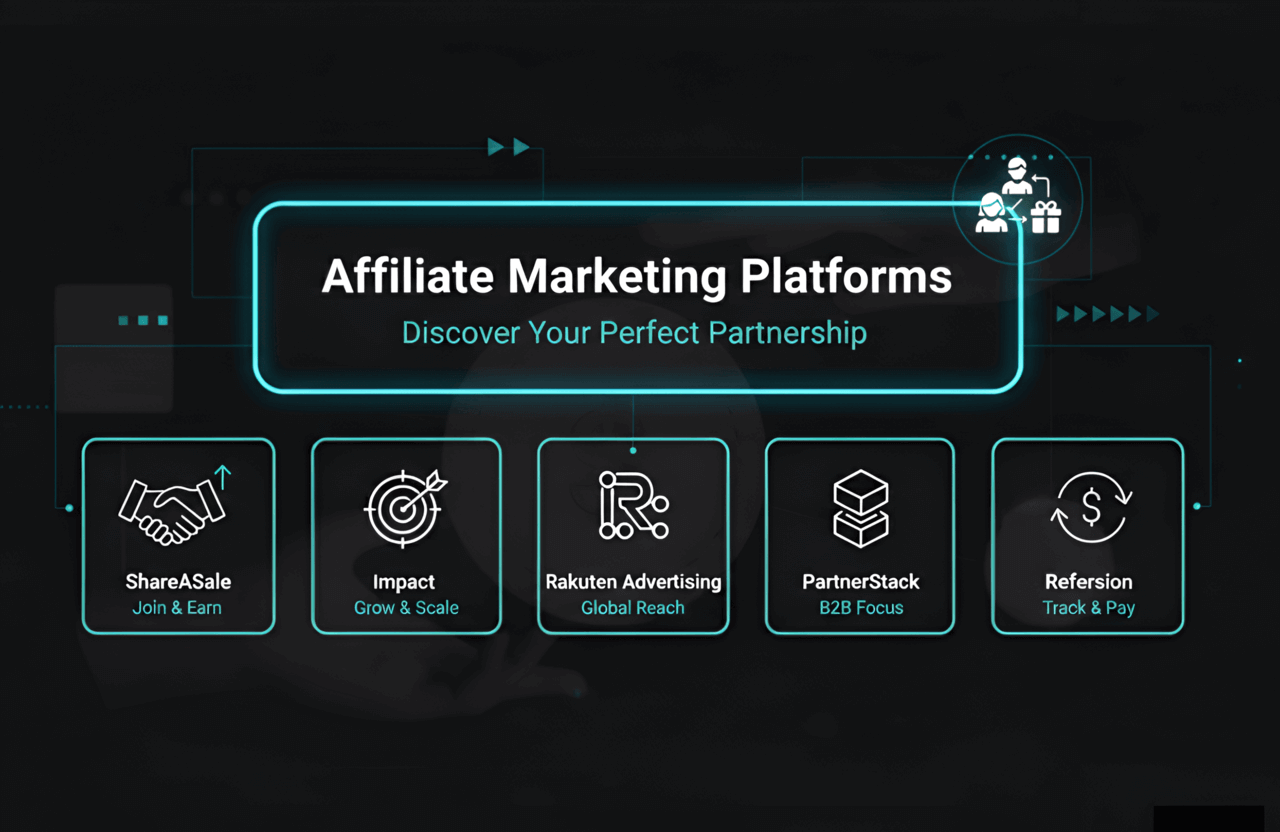
- ShareASale
- Impact
- Rakuten Advertising
- PartnerStack
- Refersion
Referral Marketing Platforms
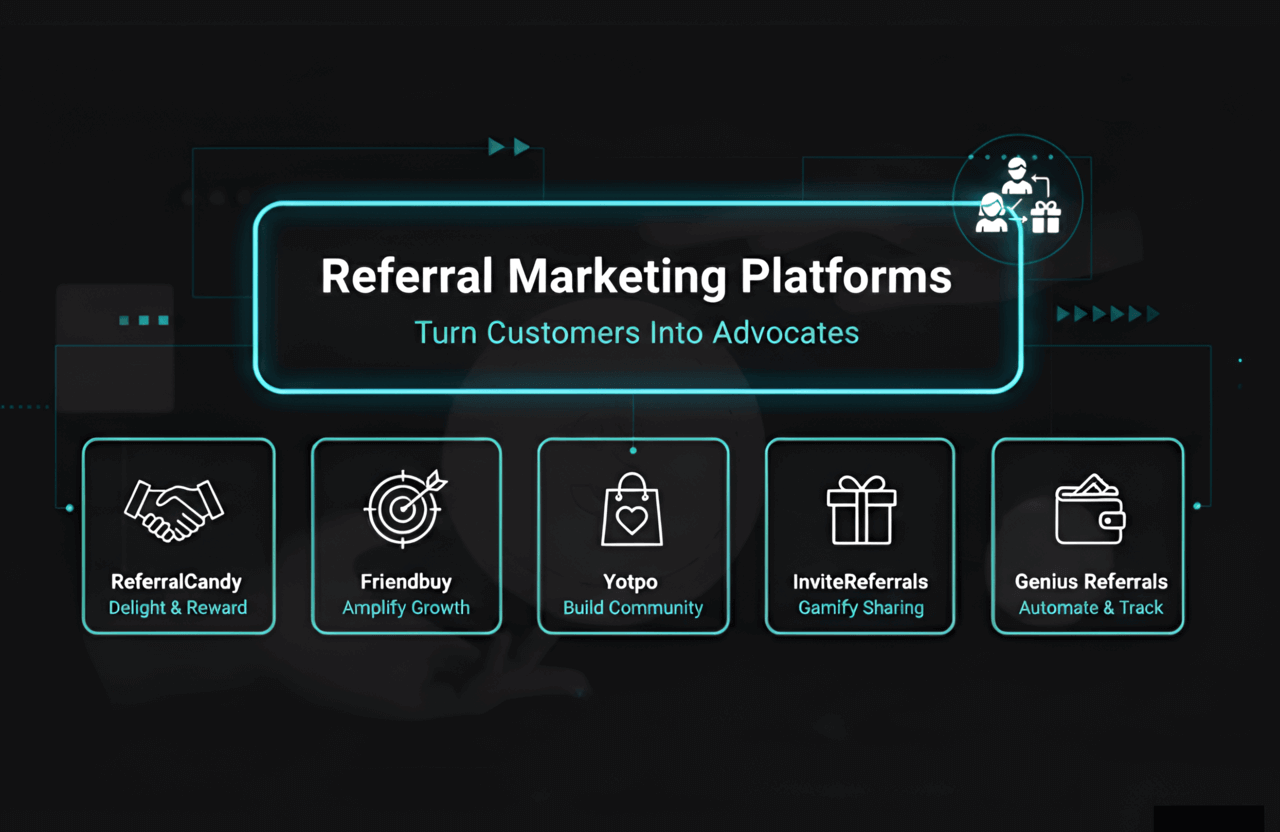
- ReferralCandy
- Friendbuy
- Yotpo
- InviteReferrals
- Genius Referrals
Don't overcomplicate the tech. Just pick a tool that natively plugs into whatever software stack you are already using so you don't have to hire a developer.
SEO and AI Implications
This is where things get really interesting. Both of these strategies actively feed the search engines and the new AI bots:
- Affiliate links: Having 500 blogs link to your product page is amazing, but you absolutely must ensure those affiliates are using rel="nofollow" or rel="sponsored" tags. If Google catches you trying to buy organic PageRank via affiliates, they will nuke your site from orbit (Google Search Central).
- Referral content: Happy customers naturally leave authentic reviews on third-party sites. AI models absolutely feast on these real-world trust signals to decide who to recommend.
- Brand mentions: Both strategies dramatically spike how often your brand name is typed out on the internet. The more chatter there is about you, the more likely ChatGPT is going to bring you up in a summary.
Want to completely geek out on how this affects your overall rankings? Take a detour through our guides on SEO Onpage vs Offpage Optimization and the brutal reality of Search Engine Positioning SEO.
Frequently Asked Questions
Can I really run both an affiliate and referral program at the exact same time?
100%. In fact, you probably should. Let your affiliates act like a massive megaphone to strangers, and use your referral program to quietly turn your existing buyers into recruiters. Just make sure your tracking software doesn't accidentally pay them both for the exact same sale.
How do I actually stop fraud from ruining my margins?
You have to be ruthless. Use dedicated tracking software that automatically flags suspicious IP addresses or weird buying patterns. For referrals, strictly limit rewards to one per household and require an actual credit card on file before issuing a payout.
What is the typical ROI I should expect here?
It's impossible to give a blanket number because industries vary wildly. But generally speaking, both of these are far more cost-effective than burning cash on Google Ads. Referrals will almost always yield a much higher conversion rate and lower churn, while affiliates will simply bring you raw volume that you could never reach on your own.
Your Next Steps: Building a High-Performance Program
Look, affiliate and referral marketing are not mortal enemies fighting for your budget. Heading into 2026, the brands that are surviving the privacy crackdowns are the ones using both. They leverage the ruthless reach of affiliates to bring people in the door, and rely on the deep trust of referrals to keep the engine running.
To stop reading and start executing:
- Write down exactly who you are trying to reach and how much you can afford to pay for them.
- Pick a platform from the lists above. Don't build it yourself.
- Create an incentive that actually makes people excited to participate.
- Plaster the program everywhere—in your emails, on your homepage, and inside your app.
- Watch the numbers, kick out the bad actors, and send your top advocates a thank-you gift.
If you want to dig deeper into how to actually acquire traffic, spend your afternoon reading through How To Get Backlinks For Your Website and see how product guys are fighting the Amazon FBA vs. Dropshipping war for channel dominance.
At the end of the day, stop overthinking the definitions. Whether you are paying a blogger or rewarding a fan, you are just building an army of advocates. Treat them right, and they will build your business for you.