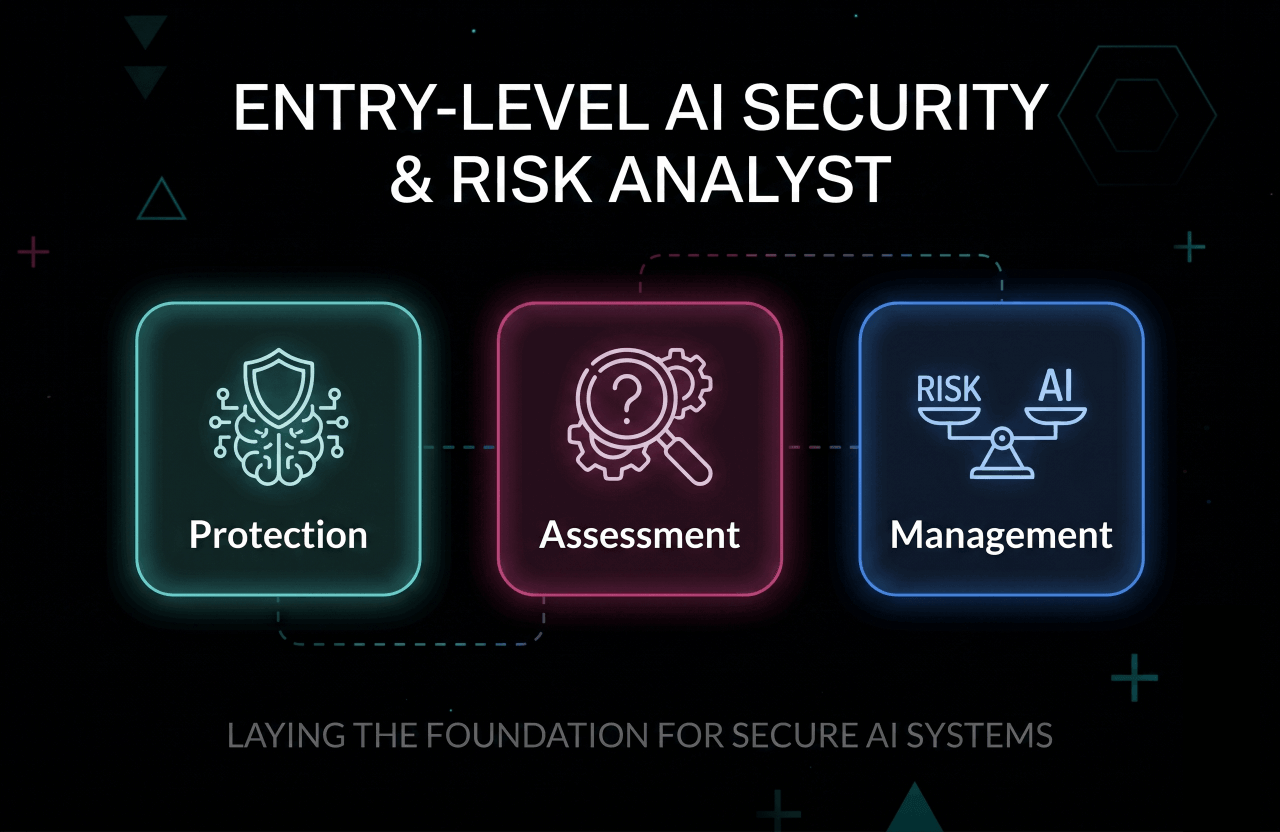
Okay, let's be real for a minute. AI is basically everywhere. It's wild, it's fast, and frankly, it's a total security mess. Companies are scrambling to launch these fancy new models, and half of them have no clue how to actually lock the doors. That’s exactly where you come in. We need people who get how these systems break and more importantly, how to stop them.
That is the whole point of being an entry-level AI security and risk analyst.
By 2026, this gig has become one of the hottest paths to get your foot in the door if you're obsessed with cybersecurity and the wild frontier of AI. It doesn't matter if you just snagged your degree, taught yourself to code on the side, or are just trying to escape a soul-crushing IT helpdesk job. If you want to know what this life actually looks like, keep reading.
I'm going to walk you through the reality of the role. No fluff, no buzzwords. We’ll talk about what you’re actually doing all day, the certifications that matter (and the ones that are just marketing noise), and how to actually get hired.
Why now? Because AI is evolving, and so are the ways people break it. Data poisoning, model theft, adversarial attacks! it's getting crazy out there. Companies are desperate for anyone who knows how to spot these threats.
What Is an Entry Level AI Security and Risk Analyst?
Think of it this way: you're the "digital bouncer" for a company's brain. You're the junior person on the team, and your main job is to look at a new AI, say, "How could someone wreck this?" and then figure out how to stop them.
You won't be flying solo. You’ll be talking to the senior hackers, the data nerds, and the software devs. Your entire goal? Making sure the AI doesn't spill customer data or get tricked into doing something illegal, all while trying not to drive the lawyers crazy.
It’s this weird, cool mix of classic "the sky is falling" cybersecurity paranoia and cutting-edge machine learning. If you want to be at the exact spot where the most interesting tech things are happening, this is basically the front row.
Key Responsibilities
- Watching the dashboards like a hawk for weird activity.
- Helping the senior folks figure out if a new project is actually safe to ship.
- Poking the AI with a stick (vulnerability scanning) to see if it breaks.
- Writing up the post-mortem reports when everything goes sideways.
- Keeping the dev team from doing something completely reckless.
- Staying glued to the news to see what new, terrifying tricks hackers invented overnight.
- Translating "tech-speak" for the compliance team so they understand the danger.
Further reading: If you really want to see how the big leagues think, scan through the NIST AI Risk Management Framework. It's dry, but it's the gold standard for this stuff.
Why Is AI Security and Risk Analysis Important?
AI isn't just generating silly memes anymore. It’s approving mortgages, making medical diagnoses, and controlling cars. If someone hacks that? It's not just a PR problem; it's a disaster. As a junior analyst, you're on the front lines:
- Stopping "adversarial attacks" (aka tricking the AI by feeding it junk).
- Making sure the training data doesn't accidentally leak.
- Keeping the company out of massive legal trouble with stuff like the EU AI Act.
- Ensuring the AI isn't picking up human biases and acting like a jerk.
Businesses finally realized they can't just launch AI blindly. That’s why they’re dumping money into these security roles in 2026.
Core Skills for Entry Level AI Security and Risk Analysts
Look, stop panicking, you don't need a PhD in math. But you do need a brain for this.
Technical Skills
- Cybersecurity Basics: You need to get networking, firewalls, and risk management. It's the foundation.
- AI/ML 101: You don't need to build a neural network from scratch, but you need to know how they "think" and what they eat.
- Programming: Python is the language. Just learn enough to automate the boring stuff and read security scripts.
- Security Tools: Get comfy with SIEM dashboards and basic pentesting scanners.
- Cloud Platforms: AI lives in the cloud now. Knowing AWS/Azure security is a huge flex.
Analytical and Soft Skills
- Risk Assessment: Can you look at a disaster and tell what's actually important?
- Problem Solving: You need to be the kind of person who enjoys a really frustrating puzzle.
- Attention to Detail: Spotting the one weird line of code in a gigabyte of log files.
- Communication: If you can't explain a cyber threat to a CEO who's busy on their phone, you won't last.
- Teamwork: You’re talking to developers, lawyers, and data scientists; try to play nice.
Pro tip: Most people here didn't start in AI. They started in basic IT or general cyber, and then just binge-watched AI tutorials until they knew enough to be dangerous.
Education and Certifications
HR filters are real, and they love degrees. But a killer portfolio? That’s better. Here is what gets the attention:
- A degree is nice, but it isn't the whole story.
- Certifications. They prove you didn't just sleep through a Coursera class.
Recommended Certifications
- CompTIA Security+: The absolute baseline. Don't leave home without it.
- Certified Ethical Hacker (CEH): Great for learning how to think like a criminal.
- ISC2 Certified in Cybersecurity (CC): A really solid entry-level badge.
- Cloud Security Certs: Microsoft's Security Fundamentals or AWS Cloud Practitioner will make your resume pop.
Don't sleep on platforms like edX or Udacity. You can learn the core mechanics of machine learning from your couch for peanuts.
Further reading: Trying to figure out how to market yourself online? Steal some strategies from our SEO for New Website Checklist. The rules for ranking on Google are surprisingly similar to getting a recruiter to look at your resume.
Typical Job Description and Daily Tasks
So, what are you actually doing on a Tuesday morning? Usually:
- Drinking coffee while staring at monitors to see if the AI pipelines are acting sketchy.
- Sitting in endless meetings to figure out if a new AI tool is going to accidentally break the law.
- Running security scans on new ML models.
- Freaking out (professionally) when an incident happens and locking things down.
- Writing endless reports so there is a paper trail of everything.
- Reading cybersecurity blogs to figure out what terrifying new tricks hackers invented overnight.
- Teaching the regular staff why they shouldn't paste company secrets into public AI chatbots.
As a junior analyst, you get bounced around a lot. One day you are testing code, the next you are doing paperwork. It’s the best way to figure out what you actually enjoy.
Case study: At one big hospital network, entry-level analysts spend their entire day just making sure the AI diagnosing X-rays isn't leaking patient names to the cloud. High stakes, but pretty cool work.
Where Do Entry Level AI Security and Risk Analysts Work?
Literally everywhere. If an industry has money, they are buying AI, which means they desperately need you.
- Big Tech: AI startups, cloud hosting giants, and SaaS platforms.
- Finance: Banks and crypto firms are absolutely terrified of AI fraud.
- Healthcare: Hospitals need to protect patient data from smart algorithms.
- Government: Defense contractors and intelligence agencies are hiring like crazy.
- Consulting: Managed security service providers (MSSPs) who rent out your skills to other companies.
And the best part? A massive chunk of these jobs are still fully remote or hybrid.
Further reading: Want to know how to get your portfolio seen by the right tech recruiters? Skim our guide on how to get backlinks for your website to understand digital authority.
Job Market and Salary Outlook (2026)
Let's talk money, because it's genuinely fantastic. Demand is currently destroying supply.
- Cybersecurity jobs overall are expected to explode by 32% over the next decade.
- Anything with "AI" in the title is dominating the emerging jobs market globally.
- In the U.S., a junior AI security analyst can easily pull down anywhere from $65,000 to $95,000 a year to start, depending on where you live.
Put in a couple of years of grinding, and you can transition into a senior "Red Team" role (where you get paid to break the AI) and make serious six-figure money.
Pro tip: If you can prove you understand both network security *and* how a neural network operates, you essentially get to write your own check.
How to Break Into the Field: Step-by-Step
- Nail the Security Basics: Don't jump straight into AI. Get your Security+ cert and understand how basic networks and firewalls operate first.
- Demystify the AI: You need to know how data flows. Take a free course like Coursera’s AI for Everyone just to get the vocabulary right.
- Break Stuff (Ethically): Setup a GitHub account. Do some "Capture the Flag" (CTF) security challenges online. Build a portfolio that proves you aren't just all talk.
- Network Like Your Life Depends On It: Hang out in Reddit communities like r/cybersecurity or r/MachineLearning. Go to local meetups. Talk to people who already have the job.
- Hunt for the Right Titles: Look for "AI Security Analyst," "Cybersecurity Analyst (AI/ML)," or "Risk Analyst – AI Systems." Tailor your resume for these specific keywords.
- Never Stop Reading: The tools to hack AI change weekly. If you aren't reading up on the latest, you're already obsolete.
Further reading: Building a career from scratch takes patience. Check out the mindset in our guide to learn coding for kids (seriously, the core principles of breaking down complex problems apply to adults too!).
Tips for Success in Your First Role
- Be Annoyingly Curious: Ask the senior engineers a million questions about how the architecture is set up. They love talking about it.
- Document Everything: If it isn't written down, it didn't happen. Your notes might literally save the company from a lawsuit later.
- Embrace the Chaos: When a security incident happens, pay close attention to the post-mortem meeting. That is where the real learning happens.
- Stay Ethical: Don't go poking around in systems you don't have explicit permission to test. That is how you get fired (or arrested).
- Keep Studying: Get your company to pay for your advanced certifications. Never stop upskilling.
Pro tip: If you find a new way an AI model can be tricked, write a blog post about it! Contributing to the open-source security community is the fastest way to get promoted.
Resources and Learning Paths
Seriously, bookmark these. You are going to need them.
FAQs About Entry Level AI Security and Risk Analyst Roles
Is a computer science degree required?
Nope. It helps get past lazy HR filters, sure, but a ton of analysts come from math, IT, or even totally unrelated backgrounds. If you have the right certifications and a solid GitHub portfolio, nobody cares about your degree.
Do I need to know how to code?
You don't need to be a software architect, but you absolutely need to read and tweak basic scripts. Python is the language of AI. Learn it well enough to automate your boring tasks.
What entry level job titles should I look for?
Keep your eyes peeled for: AI Security Analyst (Junior), Cybersecurity Analyst (AI/ML), Risk Analyst – AI Systems, Security Operations Center (SOC) Analyst (AI), or Information Security Analyst (AI Focus).
How can I stand out to employers?
Stop sending generic resumes. Build a home lab, run some open-source security tools against a public AI model, and write a detailed report on what you found. Handing that to an interviewer proves you actually know what you're doing.
Your Next Steps
Being an entry-level AI security and risk analyst isn't just a job; it’s a VIP ticket into the most chaotic, exciting, and future-proof sector of the tech industry. As literally every company on earth scrambles to integrate AI, they are going to desperately need people like you to keep the wheels from falling off.
Don't wait for permission. Start nailing down your basic cyber certs, wrap your head around how machine learning works, and get your hands dirty in some virtual labs. Update your LinkedIn, start connecting with people in the industry, and go after those junior roles.
The industry is moving incredibly fast, and if you have the curiosity to keep up, you can build an absolutely killer career keeping the future of technology safe.
Want to go deeper? If you want to build a personal brand that attracts recruiters, explore our guides on keyword research and SEO onpage vs offpage optimization to get your name ranking on Google.